Marine environments present a uniquely hostile challenge to exposed metals. Saltwater spray, relentless UV radiation, and constant moisture aggressively attack structural components day after day. Choosing the wrong hardware inevitably leads to premature structural failure, severe aesthetic degradation, and potentially dangerous situations at sea. You cannot compromise on reliability when navigating challenging conditions on the water.
Properly sourced and installed marine-grade stainless steel mitigates these severe risks. Buyers simply must know how to evaluate metallurgical quality and assess specific dynamic load requirements. This comprehensive guide covers the critical evaluation criteria necessary for upgrading to premium yacht fittings. We will walk you through essential metallurgy standards, deck hardware selection strategies, and critical installation realities.
Key Takeaways
- Material grade dictates lifespan: Not all "stainless" is marine-grade. 316 and 316L stainless steel are the non-negotiable baseline for saltwater exposure due to added molybdenum.
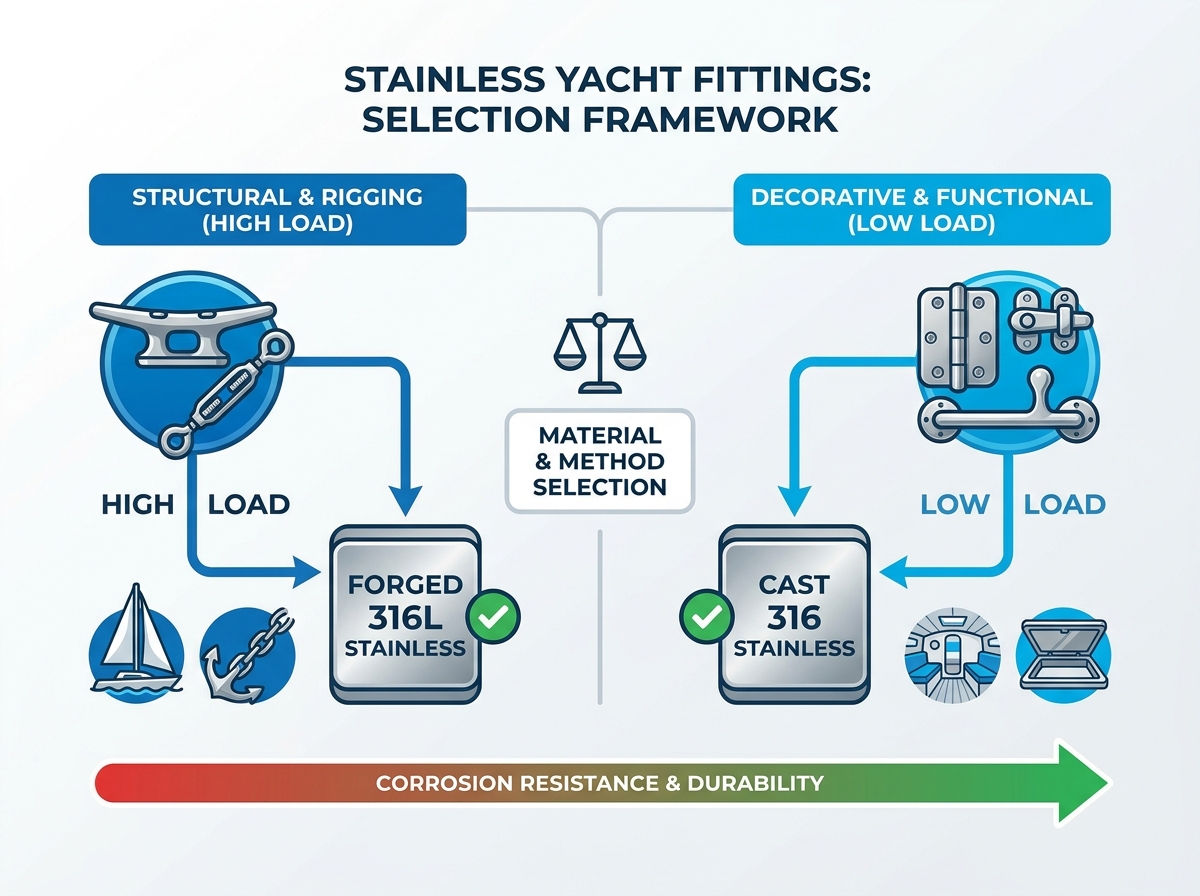
- Form follows function: Selection criteria must shift depending on whether the hardware is load-bearing (cleats, rigging) or decorative (hinges, trims).
- Installation outweighs component quality: Even premium stainless steel yacht fittings will fail if improperly bedded or if exposed to galvanic corrosion via contact with dissimilar metals.
- Maintenance is unavoidable: "Stainless" does not mean stain-free. A realistic passivation and cleaning schedule is required to prevent surface pitting and tea staining.
The Case for Stainless Steel: Material Evaluation and Baseline Standards
Modern boat builders rely heavily on stainless steel for critical applications. Other common materials often fall short in marine environments. Brass tarnishes rapidly. Chrome-plated zinc pits deeply. Aluminum lacks the necessary sheer strength for heavy loads. Stainless steel delivers exceptional durability. It ensures structural integrity for decades.
Aluminum vs. Stainless Steel
Aluminum offers an excellent strength-to-weight ratio. Builders naturally prefer it for lightweight superstructures and masts. However, stainless steel provides superior sheer strength. You need this immense strength for high-load yacht fittings and hardware.
Let us examine corrosion resistance realities. Anodized aluminum corrodes quickly once scratched. Stainless steel behaves entirely differently. It possesses a protective chromium oxide layer. This passive layer self-heals when scratched. It continuously blocks oxygen from reaching the underlying iron core.
Decoding Marine Grades (304 vs. 316 vs. 316L)
Marine environments demand highly specific alloys. 304 and 316 grades look identical to the naked eye. Their hidden chemical differences dictate their survival. 316 alloys contain 2% to 3% molybdenum. This specific addition actively resists chloride pitting from saltwater.
Establish a hard rule for your vessel. You can use 304 stainless steel only for freshwater applications. It also suits dry interior cabins perfectly. However, 316 is absolutely mandatory for exterior components. You must specify 316-grade metal for all saltwater stainless boat accessories.
Metal Performance Comparison Chart
| Material Option | Saltwater Corrosion Resistance | Sheer Strength Level | Ideal Marine Application |
| Anodized Aluminum | Moderate | High (Weight Adjusted) | Superstructures, Masts, Frames |
| 304 Stainless Steel | Good (Freshwater Only) | Very High | Interior Cabins, Freshwater Lakes |
| 316/316L Stainless Steel | Excellent (Chloride Resistant) | Very High | Exterior Deck Hardware, Rigging |
![Stainless Yacht Fittings Overview]()
Essential Categories of Stainless Boat Accessories
Structural Yacht Deck Fittings
These components handle extreme dynamic loads constantly. Examples include cleats, fairleads, chocks, and bollards. Evaluate them carefully before purchasing. Look closely for investment-cast solid pieces. Avoid cheap hollow fabrications. Hollow parts collapse under heavy mooring strains.
Always consider load distribution requirements. High-quality yacht deck fittings require robust backing plates. Backing plates spread out immense stress effectively. They prevent the hardware from tearing through your fiberglass deck during a storm.
Functional & Articulating Hardware
Functional parts require perfectly smooth operation. Key components include hinges, latches, hatch fasteners, and handrails. Focus closely on the precision of machining. Evaluate the manufacturing tolerances meticulously.
Loose tolerances cause immediate problems. They lead to annoying rattling while underway. Poorly fitted stainless steel boat accessories also suffer accelerated wear. Precision machining guarantees secure closures. It keeps your hatches watertight in rough conditions.
Rigging and Safety Fittings
These elements protect human life. They include turnbuckles, shackles, stanchions, and lifeline hardware. Never compromise on safety gear. Demand certified breaking loads from your suppliers.
Require forged construction for these critical parts. Forging aligns the internal grain structure of the metal. It makes the piece significantly stronger than cast alternatives. Use forged components whenever human safety or mast integrity is involved.
Decision Framework: How to Judge Quality Before Purchasing
Surface Finish and Polishing
A mirror polish provides more than just aesthetic appeal. Electropolishing removes surface impurities chemically. Mechanical high-polish creates a glass-like finish. Both methods minimize microscopic crevices.
Salt and moisture easily accumulate in rough textures. These trapped chlorides trigger rapid crevice corrosion. A highly polished surface forces water to bead up and roll off.
Manufacturing Methods
Match the manufacturing process to your specific application.
- Forging: Compresses metal under extreme pressure. This method is best for high-strength rigging components.
- Casting: Pours molten metal into intricate molds. It is ideal for complex stainless yacht fittings like mooring cleats.
- Machining: Cuts precision parts from solid metal blocks. This approach is perfect for articulate hinges and latches.
Weight and Material Density
Acknowledge the market reality of cheap imports. Low-cost components often cut corners invisibly. We recommend physically weighing identical components side by side. A significantly lighter piece often indicates hollow casting.
Lightweight parts may also reveal inferior alloy blending. Heavy, dense parts usually signal genuine metallurgical quality. Never trust visual appearance alone when evaluating strength.
Compliance and Certification
Safety requires documented industry standards. Look for ABYC (American Boat and Yacht Council) compliance. ISO standards also verify structural integrity independently. Insist on certified hardware for all critical structural applications.
Implementation Realities: Installation Risks and Maintenance
Mitigating Galvanic Corrosion
Improper installation ruins premium hardware instantly. The primary installation risk involves dissimilar metals. Contact between stainless steel and aluminum triggers severe galvanic corrosion. Carbon steel causes similar destructive reactions.
You must isolate these metals completely. Specify the mandatory use of dielectric greases during assembly. Nylon washers provide excellent physical barriers. Tef-Gel isolation pastes also prevent unwanted electron transfer. Proper isolation guarantees long-term durability.
Proper Bedding and Sealing
Water ingress destroys deck cores over time. Proper bedding prevents catastrophic structural rot. You must evaluate marine sealants carefully.
Polyurethane offers incredible adhesive strength. Polysulfide resists chemicals well but occasionally attacks certain plastics. Silicone provides great UV resistance without permanent adhesion. Choose a sealant fully compatible with your specific deck materials.
The Reality of "Tea Staining"
Set realistic expectations for your marine metalwork. Surface rust frequently occurs on premium 316 stainless. We call this brown discoloration "tea staining." It happens often in oxygen-starved environments. High-salt locations also accelerate this chemical process.
Basic maintenance protocols prevent permanent pitting damage.
- Perform regular fresh-water washdowns after every offshore trip.
- Apply passivating pastes semi-annually to restore the oxide layer.
- Avoid using abrasive steel wool entirely.
- Wipe all metal surfaces completely dry after heavy spray exposure.
Shortlisting Suppliers: Finalizing Your Hardware Selection
OEM vs. Aftermarket Upgrades
Upgrading hardware requires strategic choices. Sometimes you must exactly match existing deck hole patterns. This approach minimizes complicated fiberglass repairs. Other times, you desperately need a structural upgrade.
Moving to a larger base footprint improves load distribution significantly. Consider larger bases when replacing heavily stressed mooring cleats. The extra effort ensures a stronger, safer vessel.
Warranty and Provenance
Evaluate supplier trustworthiness carefully. Ask for transparent metallurgical testing reports. Reliable vendors gladly provide them upon request. Do they offer long-term replacement warranties against structural failure?
A strong warranty protects you against hidden defects. It proves the manufacturer stands behind their metallurgical claims.
Next Steps
Take immediate action on your vessel. Audit your current hardware inventory closely. Measure your existing deck footprints accurately. Prioritize the replacement of structural deck components first. Cosmetic upgrades should always come second.
Conclusion
Upgrading to premium marine hardware represents a vital long-term investment. It directly enhances vessel safety and operational peace of mind. High-quality structural components also improve overall asset retention. Informed purchasing decisions demand strict adherence to specific baseline criteria.
Prioritize 316-grade alloys for any external saltwater exposure. Match the manufacturing method perfectly to the intended load requirement. Finally, follow strict installation protocols to avoid dissimilar metal corrosion entirely. Following these steps ensures your vessel performs flawlessly for years.
FAQ
Q: Why is my stainless steel boat hardware rusting?
A: Rusting occurs due to oxygen starvation and chloride accumulation. Stainless steel relies on oxygen to maintain its protective chromium oxide layer. Dirt and salt deposits block oxygen, leading to surface tea staining. If left uncleaned, this progresses into structural crevice corrosion.
Q: Can I mix 304 and 316 stainless steel fittings on my yacht?
A: We strongly advise against mixing these grades in external environments. Mixing them can trigger mild galvanic reactions. Furthermore, 304 will degrade much faster in saltwater, leading to uneven deterioration and compromised aesthetics across your deck.
Q: Are magnetic stainless steel yacht fittings lower quality?
A: No, this is a common myth. While 316 stainless is non-magnetic in its raw state, cold-working processes alter its structure. Forging, bending, or aggressive machining can make high-quality 316 stainless slightly magnetic without compromising its corrosion resistance.
Q: How often should I polish my yacht deck fittings?
A: A pragmatic timeline depends on your vessel usage. For active saltwater cruisers, perform a basic fresh-water rinse after every trip. Apply a dedicated passivating polish every three to six months to remove micro-contaminants and restore the protective oxide layer.