Boom hardware failure represents a high-risk scenario aboard any vessel. Dynamic loads during jibes and heavy weather make your boom and mast components incredibly stressed. A sudden sheer pin failure under dynamic load threatens both crew safety and rig integrity. Transitioning from OEM components to specialized aftermarket yacht fittings requires precise matching. You must align working loads, extrusion profiles, and connection types flawlessly. Mismatched elements quickly introduce point-loading and dangerous stress fractures. We aim to provide a technical evaluation framework for specifying, sizing, and upgrading rigging hardware. You will learn how to reinforce these systems without over-engineering them. This guide ensures your hardware upgrades maintain perfect system compatibility across all sailing conditions.
Key Takeaways
- System Compatibility: Upgrading sailboat boom fittings requires holistic alignment with existing mast connections and internal outhaul systems.
- Material Realities: Selecting hardware requires balancing tensile strength with galvanic corrosion risks, particularly when mixing stainless steel components with aluminum spars.
- Specification Metrics: Procurement should be based on Safe Working Load (SWL) and dimensional tolerances (pin diameters, toggle widths), not just vessel length.
- Connection Integrity: The reliability of supporting standing rigging relies heavily on proper tensioning and termination choices (e.g., mechanical vs. sailboat swage fittings).
The Structural Role of Boom Hardware in Rigging Systems
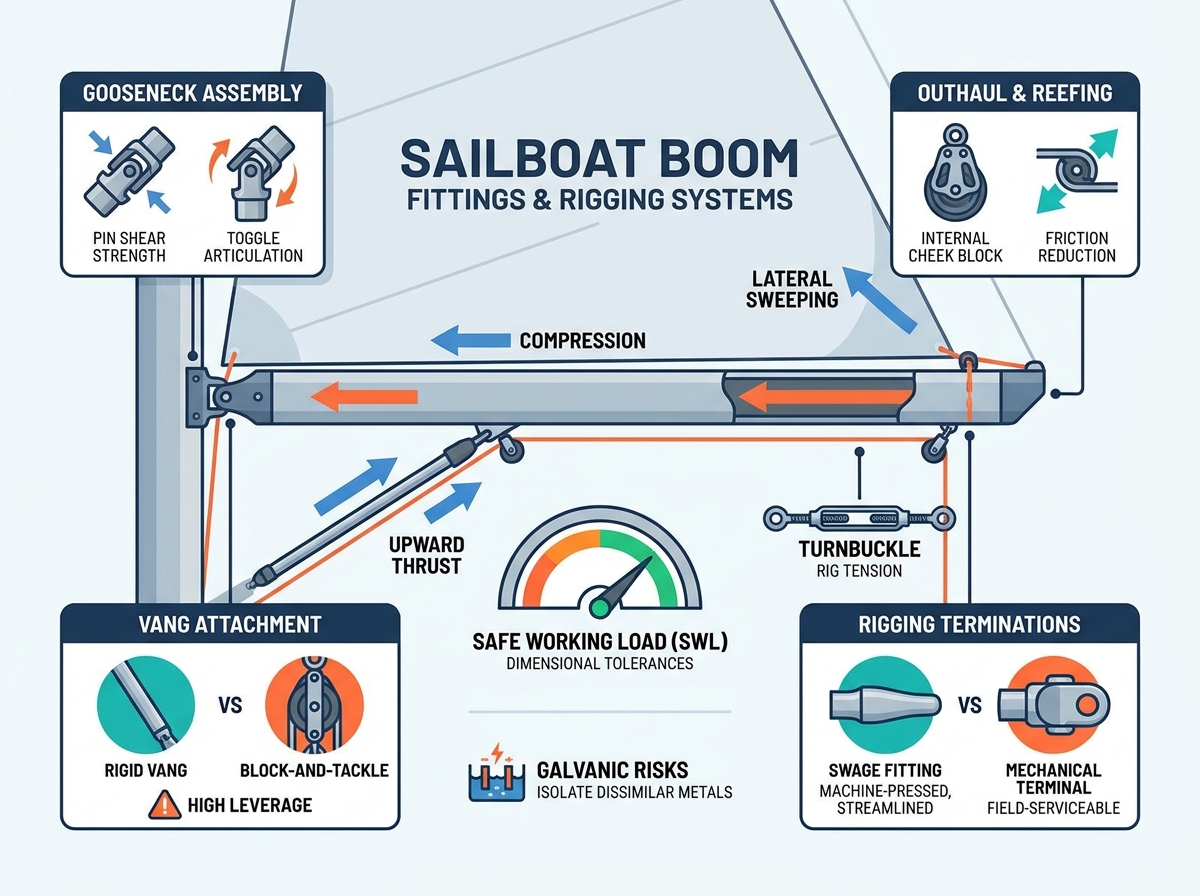
Understanding boom dynamics begins by defining the intense forces acting on it. The boom endures massive compression loads from the mainsheet and vang. Wind catching the sail generates a severe upward thrust. Uncontrolled jibes produce violent lateral sweeping motions. These combined forces create multidirectional stress vectors across every connection point. Standard hardware struggles to manage these dynamic shifts over time.
You must carefully analyze common points of failure across your rig. Cyclical fatigue degrades standard hardware at an alarming rate. Clevis pins wear down and toggles develop micro-fractures under repeated load cycles. Aesthetics must take a back seat to structural integrity during any inspection. A highly polished bracket means nothing if internal stress fractures compromise its load-bearing capacity. You should look for elongation in pin holes and stress lines around welded joints.
The relationship between the mast and boom ultimately dictates your hardware choices. Specialized sailboat mast fittings determine the absolute limitations of your boom configuration. The gooseneck bracket and mast track absorb massive compression loads from the boom extrusion. You cannot safely install an oversized, heavy-duty boom toggle if your existing mast bracket lacks the necessary structural backing. Holistic alignment ensures the entire rig functions as a cohesive unit under extreme stress.
![yacht fittings]()
Categorizing Core Yacht Boom Fittings and Components
Gooseneck Assemblies and Toggles
The gooseneck acts as the critical hinge point linking your boom to the mast. These assemblies typically feature universal joints, trunnions, or fixed brackets. Universal joints offer superior articulation across multiple axes. Trunnions handle massive horizontal loads but often limit vertical travel. Fixed brackets provide robust simplicity but require perfect alignment to prevent binding.
Evaluating these yacht boom fittings requires strict attention to pin shear strength. You must also calculate toggle articulation limits under heavy vang loads. If the toggle bottoms out before the boom reaches its maximum downward angle, leverage forces will instantly sheer the retaining pin. Always specify components offering a wider articulation range than your sail plan demands.
Boom Vang Attachments (Bails vs. Lugs)
Vang attachments manage the powerful upward thrust generated by the mainsail. Sailors generally choose between hard rigid vangs and soft block-and-tackle systems. Rigid vangs support the boom weight during reefing and eliminate the need for a topping lift. Soft block-and-tackle vangs offer lightweight, highly adjustable tension control for racing applications.
The structural requirements for vang hound fittings remain exceptionally high. These components handle severe upward leverage every time a gust hits the sail. Bails wrap around the entire boom extrusion to distribute loads evenly. Welded lugs offer a sleeker profile but concentrate stress directly onto the fastener points. Proper backing plates become mandatory when installing custom lugs on thin-walled extrusions.
Outhaul and Reefing Hardware
Managing the foot tension of your mainsail involves specialized outhaul and reefing hardware. Internal cheek blocks keep the boom profile clean and reduce windage. External cheek blocks remain easier to inspect and service while underway. Reefing hooks sit near the gooseneck to secure the sail tack during heavy weather.
Friction reduction serves as the primary evaluation metric for running rigging hardware. These lines operate under extreme static tension. High-load sheaves must utilize premium bearings to ensure smooth adjustments. Consider the following steps when evaluating outhaul hardware:
- Verify the sheave diameter perfectly matches your specified line size.
- Check the bearing material (delrin vs. torlon) against your anticipated static loads.
- Inspect the cheek block side plates for any signs of lateral deflection.
- Ensure reefing hooks feature smooth, polished radii to prevent sail chafing.
Evaluating Materials and Terminations for Yacht Rigging Fittings
Metal Alloys and Galvanic Risks
Selecting the right alloy dictates the longevity of your rigging hardware. 316 Marine Grade Stainless Steel offers excellent tensile strength and superior pitting resistance. Forged aluminum provides significant weight savings but sacrifices ultimate breaking strength. Titanium delivers unmatched strength-to-weight ratios but carries a premium price tag.
Implementation risk spikes dramatically when mixing dissimilar metals. Installing stainless steel fittings onto an aluminum boom extrusion creates a galvanic cell. Saltwater acts as the electrolyte, causing the aluminum to corrode rapidly around the fastener holes. You must isolate dissimilar metals using specialized pastes like Duralac or Tef-Gel. This simple preventative measure saves expensive boom extrusions from premature failure.
Marine Material Properties Comparison
| Material Type | Tensile Strength | Galvanic Risk (on Aluminum) | Best Application Scenario |
| 316 Stainless Steel | Very High | High (Requires isolation) | High-load toggles, pins, and bails |
| Forged Aluminum | Moderate | Low (Matches extrusion) | Cheek blocks and internal track cars |
| Titanium | Exceptional | High (Requires isolation) | Grand prix racing hardware |
Rigging Terminations and Adjustments
Standing rigging terminations determine the absolute reliability of your support systems. Factory-pressed sailboat swage fittings deliver streamlined aesthetics and exceptional fixed strength. These machine-pressed terminals eliminate bulk and reduce windage aloft. Conversely, mechanical terminals offer field-serviceability. You can inspect and replace mechanical fittings using simple hand tools, making them ideal for offshore cruisers.
Managing rig tension indirectly dictates the static resting loads applied to boom hardware. A properly calibrated turnbuckle sailboat setup ensures your mast remains perfectly in column. Loose rigging allows the mast to pump, transmitting shock loads directly into the gooseneck. Over-tightened turnbuckles apply constant, aggressive compression forces down the mast track. Precise tension management prevents premature hardware fatigue across the entire vessel.
Implementation Risks: Sizing, Retrofitting, and Alignment
Dimensional verification remains the most critical phase of any hardware upgrade. You must meticulously measure pin diameters, fork widths, and fastener spacing using digital calipers. Never accept "close enough" sizing when matching new hardware to existing brackets. An undersized clevis pin rattles inside the toggle hole, creating dangerous point-loading. This concentrated stress quickly leads to premature sheer failure during heavy weather.
Extrusion profiling presents another massive challenge for retrofitting hardware. Most aftermarket brackets feature flat backing plates. Modern boom extrusions often utilize curved or teardrop profiles. Bolting a flat bracket onto a curved surface guarantees failure. You must utilize custom-machined shims to bridge the gap perfectly. Internal backing plates then distribute the concentrated fastener loads across a wider surface area of the aluminum extrusion.
Installation traps catch many boat owners off guard during DIY upgrades. Utilizing incorrect rivet materials often destroys spars. Shooting stainless steel rivets into an aluminum boom without proper nylon sleeves guarantees rapid galvanic corrosion. Improper tap-and-die thread engagement ruins machine screws instantly. Always use the correct drill bit size and lubricate your taps when cutting new threads into thick mast walls. Clean the tapped holes thoroughly before applying thread-locking compounds.
Shortlisting Logic and Procurement Framework
Defining your specific success criteria streamlines the procurement process. You must decide between prioritizing OEM exact-match replacements or engineering a custom upgrade. OEM replacements guarantee dimensional compatibility and simplify installation. Engineering an upgrade makes sense for specific offshore requirements where factory hardware previously failed. Carefully document your structural needs before browsing catalogs.
Interpreting manufacturer specifications correctly prevents catastrophic failures. Manufacturers list both Working Load Limit (WLL) and Breaking Load metrics. Always buy based on the Working Load Limit. A reputable fitting operates safely within its WLL indefinitely. You should engineer a minimum 2:1 safety factor over your anticipated peak dynamic loads. If your vang block sees 1,000 pounds of force, specify a lug rated for a 2,000-pound WLL.
Vendor evaluation requires looking beyond marketing claims. Shortlist manufacturers based on hard technical data and aftermarket support. Consider the following criteria when selecting a supplier:
- Demand verifiable batch testing certificates for all stainless steel cast components.
- Review the warranty transparency regarding galvanic corrosion and cyclical fatigue limits.
- Ensure immediate availability of replacement sub-components.
- Verify you can purchase individual delrin washers or clevis pins without buying full assemblies.
Conclusion
Safe sailing always relies on the weakest link within your rigging system. Boom hardware endures violent dynamic loads and constant cyclical fatigue. You cannot afford to compromise specifications when upgrading these critical structural components. Balancing material strength, galvanic isolation, and precise dimensional fitment ensures your rig performs flawlessly under pressure.
Take immediate action to secure your vessel's integrity. Schedule a full visual inspection of your current gooseneck and vang fittings before your next voyage. Use digital calipers to measure existing pins for micro-wear or elongation. Always consult a professional rigger before finalizing any high-load hardware purchases to confirm your mast and boom can handle the upgraded loads safely.
FAQ
Q: How often should I inspect or replace my sailboat boom fittings?
A: Conduct detailed visual inspections pre-season and immediately following any heavy weather sailing. Look for hairline cracks, elongated pin holes, and missing cotter rings. Lifecycle expectations depend entirely on cyclical fatigue rather than chronological age. Offshore vessels require replacements far sooner than weekend cruisers. Replace suspect hardware immediately.
Q: Can I mix standard rigging hardware with high-performance yacht fittings?
A: Mixing hardware introduces dangerous load-shifting risks. Upgrading a single component, like installing a massive vang lug, changes the stress distribution. The upgraded part will easily handle the force, but it transfers catastrophic loads into the weaker, older mast bracket. Always upgrade connected systems together.
Q: What is the difference between a swage fitting and a mechanical terminal on supporting rig lines?
A: Factory-pressed swage fittings offer streamlined profiles and permanent, machine-pressed reliability. They reduce windage but require professional machinery to install. Mechanical terminals use internal compression cones. They appear bulkier but allow for DIY installation and field-repairs using basic hand tools. Both provide excellent breaking strength when installed correctly.
Q: Why are my stainless steel turnbuckles or boom pins galling?
A: Galling occurs when friction and heavy tension cause stainless steel threads to cold-weld together. This frequently happens during rig tension adjustments. The microscopic surface peaks bind and lock permanently. You must apply specialized marine thread lubricants or Tef-Gel to all stainless-to-stainless contact points prior to tensioning.