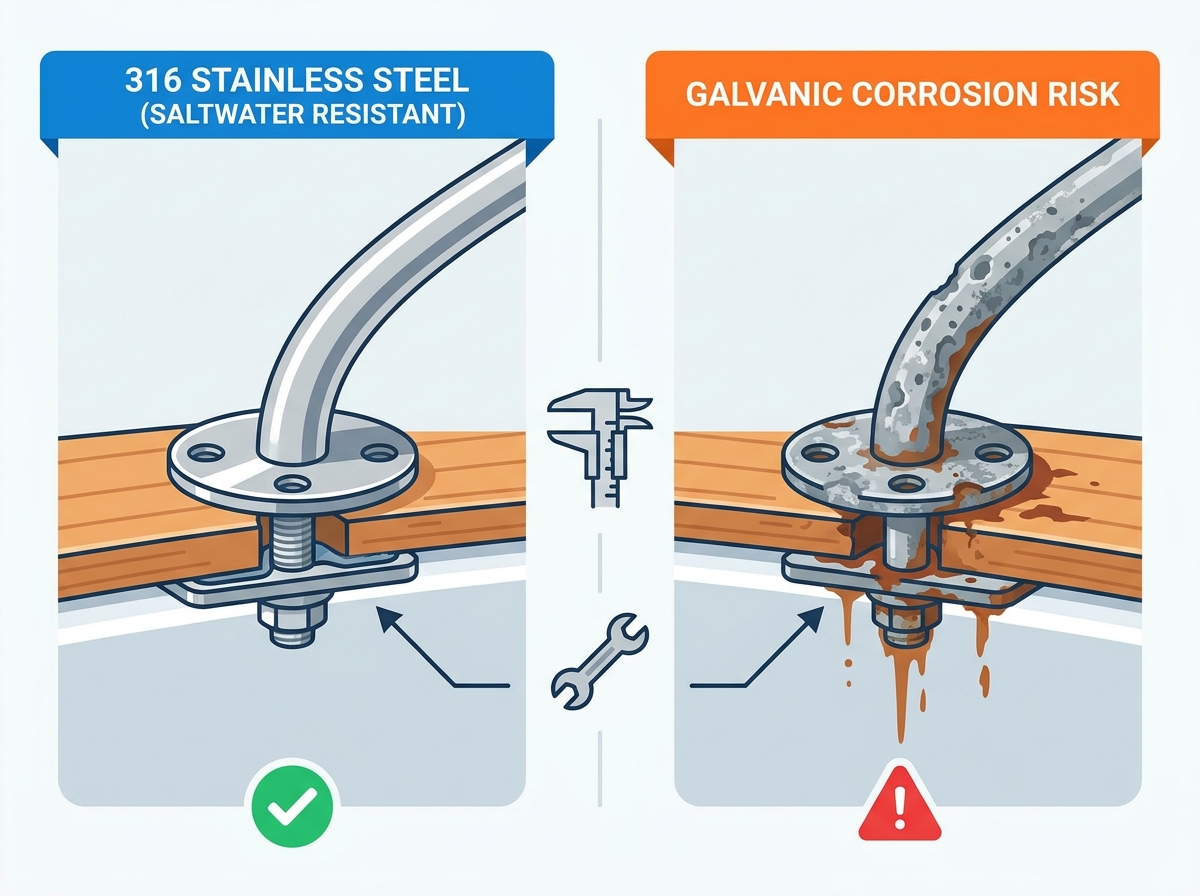
Out on the open water, standard retail-grade metals degrade rapidly in harsh saltwater environments. This rapid deterioration quickly leads to structural failures, significant safety hazards, and incredibly costly deck repairs. Proper evaluation of marine hardware requires looking far beyond shiny, polished finishes. Instead, you must carefully assess metallurgical composition, precise load-rating data, and exact dimensional compatibility. Overlooking these specific engineering factors exposes your vessel to dangerous breakdowns miles from shore. This guide provides a definitive, actionable framework for specifying, selecting, and installing essential marine rail components. We will explore specialized deck fittings, rigging securement, and proper mounting strategies to protect your investment. You will learn exactly how to match hardware specifications to your operational environment, ensuring long-term reliability and safety on the water.
Key Takeaways
Material composition dictates lifespan; 316-grade stainless steel is the non-negotiable standard for saltwater exposure.
Tubing diameter (typically 7/8-inch or 1-inch) and wall thickness must align precisely with your chosen rail fitting base to ensure structural integrity.
Specialized vessel hardware (e.g., ski boat hardware vs. yacht deck fittings) requires different load-bearing evaluations based on operational stress.
Improper installation accounts for most hardware failures—managing galvanic corrosion and watertight sealing is as critical as the hardware itself.
The Baseline of Evaluation: Material Composition and Marine Environments
Material choice fundamentally dictates how components survive saltwater. We consider 316-grade stainless steel the absolute baseline for marine environments. It contains molybdenum. This added chemical element dramatically boosts pitting resistance against the aggressive chlorides found in seawater. Conversely, 304 stainless steel lacks this specific protection. It suffers from "tea staining" and rapid surface rust soon after coastal exposure. You must avoid 304 stainless for external deck use.
Alternatives exist, but they demand careful application. Manufacturers often use chrome-plated Zamak for budget-friendly hardware. You should only use Zamak in freshwater lakes or low-stress interior cabins. Marine-grade aluminum provides excellent weight savings for modern vessels. However, it requires meticulous physical isolation from other metals to prevent galvanic corrosion. Advanced composites offer impressive strength-to-weight ratios today. We often see these composites in modern cleats and specialized blocks, though they lack the traditional visual appeal of polished steel.
Surface finish matters just as much as the core alloy. Electropolishing remains the premium surface treatment for marine metals. This electrochemical process strips away microscopic surface impurities. It leaves a smooth, chromium-rich oxide layer behind. A superior finish significantly extends your maintenance cycles. It actively repels salt crystals and minimizes the heavy manual polishing required to keep your deck looking pristine season after season.
Categorizing Core Rail Fittings: Tubing, Mounts, and Geometry
Sizing your components accurately prevents catastrophic rail failures under load. You must measure the outer diameter (OD) precisely before ordering any rail fitting. The marine industry relies heavily on 7/8-inch and 1-inch tubing standards. Moving from 7/8-inch to 1-inch tubing exponentially increases structural rigidity. You should always specify 1-inch hardware for offshore vessels facing heavy wave impacts.
Base selection depends on your exact deck footprint and mounting angle. You will typically choose between rectangular, round, and universal bases. Rectangular bases distribute load effectively along narrow gunwales. Round bases offer symmetrical stress distribution for vertical stanchions. Always match the base angle to your deck camber. Common configurations include 30-degree, 60-degree, and 90-degree mounts. A mismatched angle puts severe bending stress on the fitting.
Connections require careful articulation planning. Tees, elbows, and hinged jaw slides form the skeleton of your rail system. High-load rails demand through-bolted configurations for absolute safety. Set-screw mechanisms work well for light-duty applications. However, they can easily back out under heavy engine vibration. We strongly recommend dimpling the tubing where the set screw makes physical contact. This simple step prevents the fitting from slipping under pressure.
Integration with canvas or bimini tops requires secondary planning. Primary rail structures often support additional eye ends and deck hinges. You must ensure these secondary mounts do not compromise the structural rigidity of the main rail.
Tubing Outer Diameter (OD)
Primary Application
Relative Rigidity
Typical Vessel Size
7/8-inch
Inland, freshwater, light canvas support
Standard
Under 20 feet
1-inch
Offshore rails, heavy bimini tops, grab handles
High
20 to 40 feet
1 1/4-inch
Commercial, heavy yacht stanchions
Extreme
Over 40 feet
Vessel-Specific Hardware Configurations and Load Demands
Different vessels generate vastly different operational stresses. Your hardware choices must reflect these unique load demands accurately. A one-size-fits-all approach inevitably leads to mechanical failure.
High-displacement vessels require highly specialized components. When selecting yacht deck fittings, you must prioritize flush-mount aesthetics and massive load ratings. Cleats, chocks, and fairleads undergo tremendous strain during storm mooring. These fittings demand heavily polished, premium 316 stainless steel. Flush-mount designs keep the deck completely clear of tripping hazards while maintaining sleek, modern vessel lines.
Tow sports present entirely different engineering challenges. Ski boat hardware must endure extreme, dynamic shock loads. Wakeboard tower mounts, heavy-duty tow rings, and rigid grab rails take repeated beatings daily. An athlete carving aggressively outside the wake generates hundreds of pounds of sudden pulling force. You must evaluate these specific components for exceptional tensile strength and fatigue resistance. Standard recreational cleats simply cannot handle these violent, repetitive shocks.
Pontoon boats require hardware focused heavily on safety and smooth passenger flow. You will evaluate specialized protective components for these high-traffic boarding areas. Installing a pontoon ladder hinge guard is critical. This specific piece safely prevents severe pinch points when deploying or stowing heavy boarding ladders. It also stops mechanical binding during operation. Designing for family safety remains the top priority on recreational pontoons.
Specialized Cabin, Deck, and Rigging Components
Moving away from the rails, interior and rigging components demand equal attention. The cabin and helm stations face relentless exposure to wind, corrosive spray, and intense UV radiation. Your interior selections matter greatly.
Securing your cabin requires robust weatherproofing. A standard residential lock will fail instantly at sea. You must specify a dedicated marine sliding window latch. These specialized mechanisms utilize corrosion-proof internal springs and hardened polymer strikes. They prevent dangerous water intrusion during heavy seas. Similarly, reliable marine windshield hardware plays a vital safety role. You need vibration-resistant standoffs and specialized locking fasteners. Marine engines generate powerful harmonic vibrations. These vibrations will easily shatter a windshield if the mounting hardware lacks proper rubber isolation gaskets.
Rigging components handle the most dangerous loads on your vessel. Proper securement relies entirely on heavy-duty nautical shackles. You will routinely encounter bow shackles, D-shackles, and snap shackles. Aesthetics mean absolutely nothing here. Working load limit (WLL) and absolute breaking strength must dictate every purchasing decision. A highly polished shackle remains useless if its load rating falls below your anchor chain's demands. Always verify the stamped WLL before integrating any shackle into critical rigging.
The best components on earth will fail quickly if installed improperly. Your installation technique matters just as much as the alloy selection. Many boaters ignore basic chemistry and physics during hardware mounting.
You must actively mitigate galvanic corrosion. Dissimilar metals react aggressively in saltwater. Placing stainless steel fasteners directly into aluminum rails creates a destructive battery effect. The aluminum will quickly corrode and crumble into white powder. You must isolate these metals mechanically. We highly recommend using nylon washers for physical separation. Applying barrier pastes like Tef-Gel or Duralac directly to screw threads also stops this destructive chemical reaction.
Water intrusion rots boat cores faster than anything else. You might feel tempted to use standard household silicone. Do not do this. Silicone completely fails under marine deck stresses. You must use elastomeric marine-grade polyurethane or polyether sealants. Products like 3M 4200 or 5200 serve as industry standards for through-deck penetrations. High-quality butyl tape also works exceptionally well for bedding deck fittings. It remains permanently flexible and aggressively seals out moisture.
Deck fittings require substantial structural reinforcement below the surface. Gelcoat is extremely brittle. Heavy loads will easily cause spider-cracking around mount points. You must install backing plates under all high-stress mounts. Use thick aluminum or G10 fiberglass plates. These backing plates distribute the immense pulling force of cleats and stanchions across a much wider deck area.
Dry-fit all components to verify exact hole alignment before applying sealant.
Chamfer the edges of drilled fiberglass holes lightly to prevent gelcoat chipping.
Apply a generous bead of marine sealant around the fastener shank, not just under the hardware base.
Tighten bolts firmly, but do not squeeze all the sealant out during the initial tightening phase.
Allow the sealant to cure fully before applying any operational loads to the hardware.
Vendor Shortlisting: Purchasing Criteria and Next Steps
Sourcing your parts from reputable suppliers guarantees long-term success. The market floods with cheap, imitation metals every single year. You must know exactly how to filter bad vendors out of your supply chain.
Watch out for obvious red flags in product descriptions. Avoid any vendor using vague material terminology. Phrases like "rust-resistant metal" or "marine-style steel" are incredibly dangerous. Reputable suppliers explicitly state specific alloy grades like "316L Stainless Steel" and stand behind their metallurgy.
Traceability proves manufacturing quality. You should prioritize suppliers offering clear metallurgical test reports upon request. Ask them directly about their warranty terms. A strong warranty indicates supreme confidence in their manufacturing process. Ensure they stock accessible replacement parts locally. You do not want to replace an entire rail system just because a single jaw slide broke.
Finally, embrace project consolidation. Sourcing a complete railing system from a single specialized distributor provides massive logistical benefits. Buying your tubing, fittings, and fasteners together ensures perfect dimensional compatibility. It also delivers visual consistency across your vessel. Piecemeal purchasing often leads to mismatched polishes, differing thread pitches, and highly frustrating installation delays.
Conclusion
Selecting components for your vessel is a serious engineering decision. It goes far beyond simple aesthetic upgrades. You must match the exact material, dimensional footprint, and load profile precisely to your specific marine environment. Cutting corners on alloy quality or skipping structural backing plates ultimately compromises vessel safety and passenger well-being.
Take immediate action to secure your deck. First, thoroughly audit your current deck layout and identify any corroded or loose fittings. Next, use digital calipers to measure your existing tubing outer diameter precisely. Finally, consult a trusted, specialized supplier catalog to finalize your comprehensive parts list. Upgrading your hardware systems today ensures reliable, stress-free navigation tomorrow.
FAQ
Q: What is the difference between 7/8-inch and 1-inch rail fittings?
A: Physical compatibility and overall strength separate these two common sizes. You must match the fitting perfectly to your tubing outer diameter. While 7/8-inch works well for light freshwater use, 1-inch tubing offers significantly higher structural rigidity. We highly recommend the 1-inch standard for offshore applications and heavy grab rails.
Q: Can I use 304 stainless steel for marine hardware?
A: You should generally avoid 304 stainless steel in harsh marine environments. It lacks molybdenum, making it highly susceptible to chloride pitting. Saltwater exposure quickly causes unsightly "tea staining" and surface rust. You may use 304 safely only in freshwater settings or dry interior cabin spaces.
Q: How do I prevent screws from loosening on rail fittings?
A: Constant engine vibration and hull pounding easily loosen standard set screws. You must dimple the tubing slightly where the set screw makes contact. This creates a physical mechanical lock. Additionally, always apply a medium-strength, marine-grade thread locker.
Q: What sealant should I use under deck hardware bases?
A: Never use standard household silicones on a boat deck. They lack the adhesion required to survive hull flexing. You must use elastomeric marine sealants like 3M 4200 or 5200. High-quality marine butyl tape also provides excellent, permanently flexible waterproofing for hardware bases.