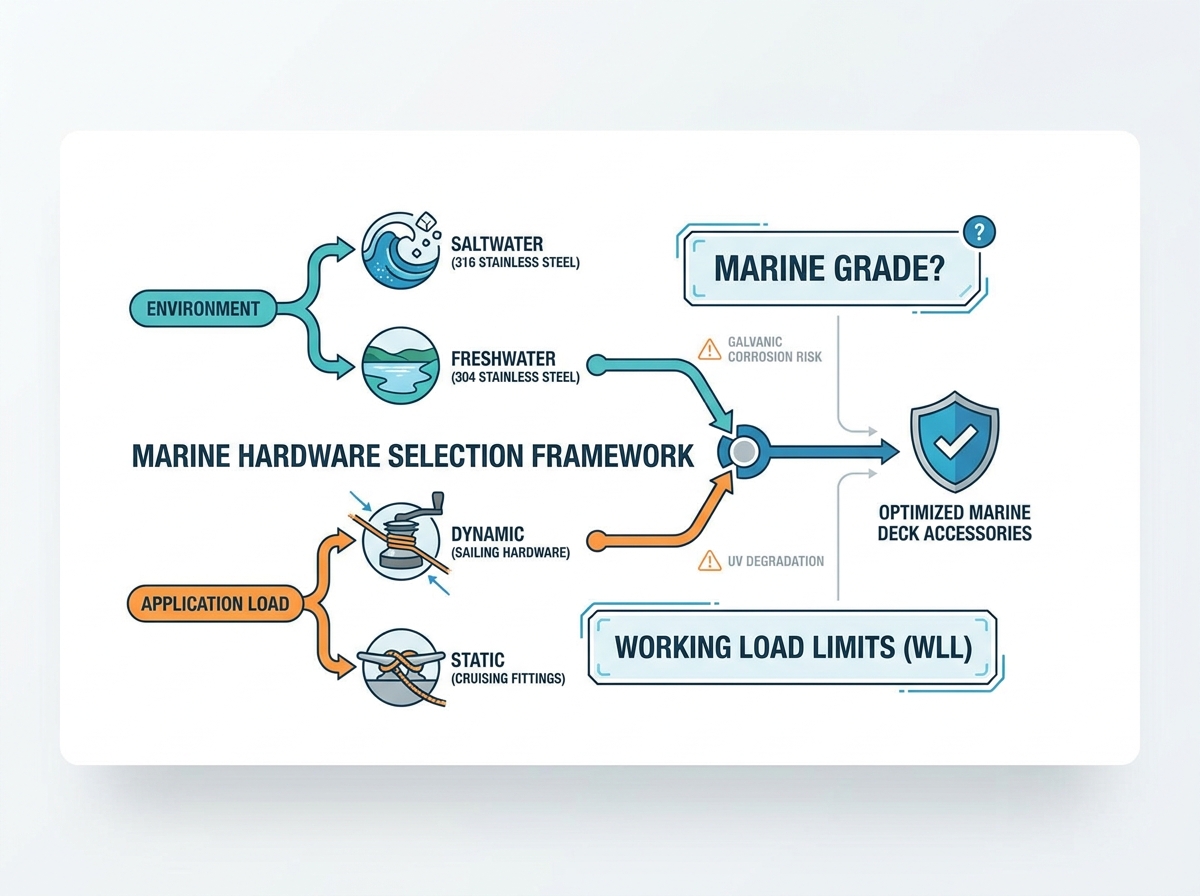
Deck hardware failure isn't just a minor inconvenience for boat owners. It directly results in lost gear, damaged docks, or compromised vessel safety in unforgiving environments. The market currently overflows as vendors pitch various hardware & marine supplies heavily marketed as "marine-grade." However, these components vary wildly in underlying metallurgy and actual working load limits. Buyers often struggle to separate genuine durability from clever marketing buzzwords.
This guide provides a no-nonsense, spec-driven framework for outfitting your vessel. We will explore how to evaluate, select, and install marine hardware designed to genuinely withstand salt, mechanical stress, and harsh UV exposure. Read on to master material selection, secure your hatches properly, and ensure your deck fittings survive the harshest offshore conditions.
Key Takeaways
Material specification is non-negotiable: 316 stainless steel is the baseline for saltwater deck fittings; 304 is strictly for freshwater or protected interior use.
Form follows vessel function: Deck fittings for yachts require different working load limits and profiles compared to high-tension marine sailing hardware.
Latches and holds dictate safety: Evaluating the stretch-degradation of a marine rubber latch versus the mechanical lock of a stainless marine hold down latch is critical for hatch security.
Installation dictates lifespan: Even top-tier marine hardware fails if installed without proper backing plates and dielectric sealants to prevent galvanic corrosion.
Evaluating Core Marine Hardware: Specs Over "Marine Grade" Labels
Manufacturers frequently stamp the term "marine grade" onto product packaging. You must recognize it primarily as marketing jargon. It does not represent a certified metallurgical standard. True evaluation requires analyzing the chemical composition of the metals involved.
You might assume all stainless steel survives saltwater indefinitely. It does not. The 304 stainless alloy lacks molybdenum. This omission makes it highly susceptible to pitting. Crevice corrosion quickly degrades 304 components in harsh saltwater environments. Always demand 316 stainless steel for exterior use. It features 2% to 3% molybdenum. This essential addition drastically improves chloride resistance. The 20% to 30% price premium for 316L pays off immediately. You avoid premature structural failures and dangerous equipment breaks.
We also evaluate alternative materials for specific applications. Anodized aluminum offers excellent weight savings for radar arches. Bronze provides unmatched durability for below-waterline thru-hulls. High-density UV-stabilized composites work brilliantly for low-load cleats on small dinghies.
Marine Material Application Chart
Material Type
Primary Advantage
Best Application
316 Stainless Steel
Maximum chloride resistance
Exterior deck hardware, high-load fittings
304 Stainless Steel
Cost-effective strength
Freshwater use, protected cabins
Anodized Aluminum
High strength-to-weight ratio
Masts, radar arches, window frames
Silicon Bronze
Zero dezincification risk
Below-waterline thru-hulls
Essential Deck Fittings for Yachts and Powerboats
Mooring stresses demand precise hardware selection. You must calculate working load limits (WLL) accurately. We base these critical calculations on total vessel displacement. A heavy powerboat easily crushes undersized bollards during unexpected storm surges. Never underestimate the sheer force of windage on a high-profile hull.
A combination hawse pipe cleat offers distinct advantages for larger vessels. It creates a seamless, flush deck profile. It also drastically reduces line chafing. By routing the mooring line through the bulwark, you prevent friction damage against the fiberglass rail. You must choose robust deck fittings for yachts capable of handling massive lateral loads.
Chocks and fairleads require similar scrutiny. Assess all friction points along your deck. Ensure efficient line routing to prevent unexpected snagging. Smooth, highly polished inner surfaces minimize expensive rope wear.
Finally, inspect your deck fills and scuppers. ABYC standards dictate strict compliance rules. Fuel and water fills must remain clearly marked. You must separate them physically to prevent accidental cross-contamination at the fuel dock.
High-Tension Solutions: Marine Sailing Hardware vs. Cruising Fittings
Sailing introduces complex dynamic forces. Constant wind shifts load and unload rigging components aggressively. You must evaluate marine sailing hardware using entirely different criteria. Blocks, travelers, and winches require continuous load-bearing analysis. Static cruising fittings simply sit under constant tension. Dynamic components endure violent, repetitive shock loads.
Modern performance sailing requires calculating weight versus strength matrices. Heavy stainless components provide bulletproof reliability. However, they add significant weight aloft. Performance racers often trade heavy stainless for modern low-friction rings or titanium hardware. This reduces pitching moments and increases boat speed.
Crew safety relies entirely on secure tethering points. You must install reliable attachment hardware. Evaluate your safety systems using these core steps:
Inspect all folding pad eyes for lateral play and metal fatigue.
Test jackline attachment points under simulated shock loads.
Replace any distorted or visibly stressed shackels immediately.
Securing Gear: Evaluating Marine Hold Down Latches and Hatches
Hatch security directly dictates vessel safety. Compromised latch tension invites catastrophic water ingress. We must evaluate moving parts closely to prevent flooded bilges. Precision engineering matters deeply here.
Flush-mount stainless steel marine hold down latches provide superior mechanical durability. They lock securely and sit flush to prevent tripping hazards. However, poorly machined versions often rattle under engine power. Look for built-in anti-rattle features. Decide if you need lockable mechanisms to deter theft at public marinas.
Sometimes flexibility provides a better solution. You might deploy a marine rubber latch on deck coolers, livewells, or outboard engine covers. They absorb engine vibration beautifully. They also prevent fiberglass damage from slamming lids.
Best Practice: Monitor your elastomeric latches closely. Expect rapid UV degradation in tropical climates. These rubber components usually dry rot within three to five years. Plan proactive replacement cycles before a latch snaps mid-voyage.
Marine Interior Hardware: Bridging Durability and Aesthetics
Cabin environments create unique, challenging micro-climates. High humidity constantly meets trapped salty air below decks. You absolutely need corrosion-resistant marine interior hardware. Standard residential cabinet hinges will rust completely within weeks. Choose 304 stainless or marine-grade brass for cabin refits.
Vibration mitigation remains crucial below decks. Engine harmonics rattle loose hardware apart. Evaluate push-button locks and positive-catch latches carefully. You want latches strong enough to prevent heavy galley drawers from flying open during violent rolls.
Weight considerations also dictate interior purchasing decisions. Solid brass looks stunning but adds massive weight. Utilize lightweight brushed aluminum or engineered plastics where appropriate. You can easily maintain a premium yacht aesthetic without adding thousands of pounds to your vessel's displacement.
Installation Realities and Implementation Risks
Even premium metals fail upon poor installation. Deck hardware requires serious structural reinforcement. You must utilize an aluminum or G10 fiberglass backing plate during installation. Bolting hardware straight through standard fiberglass guarantees deck core failure. Concentrated point loads will eventually crush the deck matrix.
Preventing deck rot takes patience. Always pot your drill holes to protect balsa or foam cores. Drill them slightly oversize first. Fill them completely using thickened epoxy. Redrill the final fastener hole directly through the solid epoxy plug. This permanently seals the vulnerable deck core from water intrusion.
Galvanic corrosion destroys dissimilar metals rapidly. You must isolate them aggressively. Mixing stainless steel hardware on aluminum masts creates a highly active galvanic cell. Always use dielectric barriers. Apply Tef-Gel generously or install insulating nylon washers to prevent the aluminum from dissolving around your stainless fasteners.
Conclusion
Prioritize Vessel Constraints: Always base your purchasing hierarchy on total vessel displacement first, followed by the operating environment (saltwater versus freshwater), and finally the load type (static versus dynamic).
Refuse Material Ambiguity: Never accept the generic "marine-grade" label. Demand verified 316 stainless steel for all exterior, load-bearing applications to guarantee genuine corrosion resistance.
Secure Professional Sourcing: Procure your equipment from specialized vendors who readily publish exact material grades, detailed working load limits, and clear warranty data.
Execute Bulletproof Installations: Protect your investment by sealing deck cores with epoxy potting and isolating all dissimilar metals. A flawless installation process secures your hardware and your safety for decades.
FAQ
Q: What is the difference between 304 and 316 stainless steel in marine hardware?
A: The key difference lies in the chemical composition. Both contain chromium and nickel, but 316 stainless steel includes 2% to 3% molybdenum. This specific addition drastically increases its resistance to pitting and crevice corrosion in chloride-rich saltwater environments. You should reserve 304 strictly for freshwater or dry interior cabins.
Q: How do I determine the correct size cleat for my boat?
A: The standard rule of thumb requires 1 inch of cleat length for every 1/16 inch of line diameter. Alternatively, you can calculate 1 inch of cleat for every 10 feet of boat length. Always round up to accommodate thicker storm lines or doubled dock lines during heavy weather.
Q: How often should a marine rubber latch be replaced?
A: Elastomeric latches suffer from continuous UV degradation and thermal cycling. They lose elasticity and eventually crack. You should inspect them thoroughly every two seasons. Plan to replace them entirely every three to five years to prevent unexpected failures while underway.
Q: Do I really need backing plates for all deck fittings?
A: Yes. You must use backing plates for anything bearing a load. Cleats, stanchions, winches, and pad eyes exert massive concentrated forces. Without a rigid G10 fiberglass or aluminum backing plate, these point loads will crush the deck core and eventually rip straight through the fiberglass.