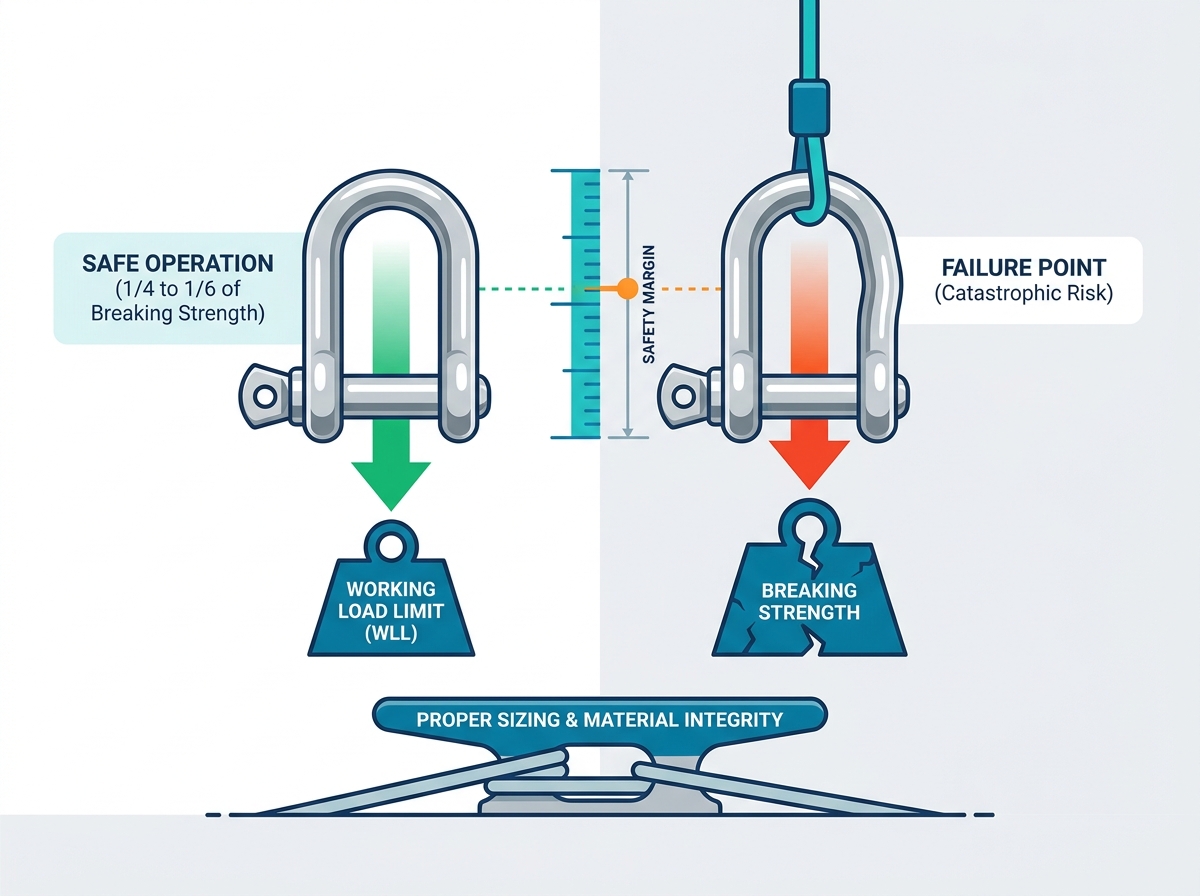
Selecting mooring and rigging components is not merely a cosmetic choice. It represents a critical risk management decision. When storms hit, vessels depend entirely on these fittings to survive high winds and surges. However, hardware failure rarely happens because a product is inherently flawed. Usually, catastrophic disasters stem from improper sizing, incorrect material selection, or basic installation errors.
A highly rated fitting means nothing if fastened incorrectly. We built this guide as an objective framework for evaluating, sizing, and installing core marine hardware. You will learn exactly how to verify load limits, choose the right alloys, and ensure long-term vessel security.
Key Takeaways
Sizing baseline: The industry standard requires at least 1 inch of cleat length for every 16 feet of boat length, though displacement and windage dictate final sizing.
Material integrity: 316 Stainless Steel offers superior corrosion resistance for saltwater environments compared to 304 SS or standard aluminum.
Load limits rule: Always evaluate shackles based on Working Load Limit (WLL) rather than breaking strength to ensure operational safety.
Installation reality: Even premium deck fittings will fail under stress without properly sized backing plates and through-bolt installation.
The True Cost of Hardware Failure: Framing Your Selection Criteria
Undersized or fatigued components fail without warning. When a mooring line rips a base from the deck, the consequences are severe. You might face catastrophic line slippage, extensive gelcoat damage, or total vessel loss. Upgrading these components secures your investment against unpredictable weather events.
Understanding Environmental Exposure
Saltwater environments demand vastly different metallurgical properties than freshwater lakes. Chlorides in seawater aggressively attack standard metals. You must evaluate your primary cruising grounds before purchasing replacement parts. Freshwater boaters might succeed using anodized aluminum. Conversely, offshore sailors require heavily alloyed stainless steel to prevent rapid degradation.
Static Versus Dynamic Loads
Your equipment handles two distinct types of stress. A calm marina mooring places steady, static tension on your boat. This predictable weight rarely stresses a fitting to its breaking point. However, offshore towing or violent storm surges generate explosive kinetic shocks. We call these dynamic loads. A sudden wave can multiply the force on a single point exponentially. Your chosen fittings must absorb these massive, instantaneous spikes in energy.
The Trust and Evidence Check
Never source unrated hardware & marine supplies from unverified online marketplaces. Cheap knockoffs often use inferior alloys. They polish beautifully but snap under pressure. You need traceable metallurgical standards to guarantee performance. Look for ISO compliance or certified laboratory testing data. A verified manufacturer provides peace of mind when conditions deteriorate.
Boat Cleats: Types, Materials, and Sizing Standards
Selecting the right horn or base requires careful consideration. You must balance vessel weight, typical line diameter, and intended use cases.
Marine Metals Comparison Chart
Material Type
Corrosion Resistance
Primary Application
Key Advantage
316L Stainless Steel
Excellent
Offshore / Saltwater
Resists chloride pitting
Anodized Aluminum
Moderate
Freshwater / Racing
Extremely lightweight
Galvanized Steel
Good
Permanent Docks
High heavy-duty strength
Material Comparison
316L Stainless Steel represents the gold standard for ocean vessels. It contains molybdenum, which prevents dangerous chloride pitting. Anodized aluminum offers a cost-effective alternative. It is highly lightweight. Racing yachts frequently utilize aluminum to reduce deck weight. Finally, galvanized steel handles massive loads. However, it lacks aesthetic appeal. You will primarily see it bolted to permanent wooden docks rather than fiberglass hulls.
Common Configurations and Use Cases
Different deck layouts require distinct profiles to maximize efficiency and safety.
Standard Horn Cleats: These serve as the dependable baseline for deck mounting. They offer simple line wrapping and superior strength.
Pull-Up or Pop-Up Cleats: These are excellent for minimizing trip hazards. They sit flush against swim platforms. Be aware they often carry slightly lower load ratings.
Through-Bulwark Solutions: A well-designed hawse pipe cleat is ideal for larger vessels. It routes heavy lines cleanly through the hull side. This drastically reduces deck chafe and keeps walkways clear.
Sizing and Selection Logic
Industry standards provide a straightforward sizing formula. You need roughly one inch of length for every 16 feet of boat. Furthermore, match the horn size to your line diameter. Use one inch of horn for every 1/16 inch of line thickness. Destructive pull-tests reveal a sobering reality. When a mount fails, it is usually the underlying fastener breaking. The horn itself rarely snaps. Therefore, proper sizing must account for both the base footprint and the internal bolt strength.
Marine Shackles: Load Dynamics and Sailing Applications
Shackles differ fundamentally from static deck bases. They constantly transfer kinetic energy through your rigging. Application-specific selection ensures safe load distribution during heavy winds.
Primary Categories
Understanding pin styles and body shapes prevents catastrophic rigging failures.
D-Shackles: Engineers design these for high in-line static loads. They connect chains or blocks in straight lines. Never subject them to side-loading. Lateral force can bend the pin or shear the threads.
Bow and Anchor Shackles: The rounded body allows for multi-directional loading. You can attach multiple lines safely. They are mandatory for anchor chain connections.
Snap Shackles: These represent essential marine sailing hardware. They feature spring-loaded pins for rapid release under heavy loads. Sailors rely on them for halyards and spinnaker sheets during fast maneuvers.
Evaluating Safe Load Limits
Many boaters mistakenly purchase rigging based on breaking strength. This is a dangerous error. Breaking strength measures the exact point of catastrophic destruction in a laboratory. Instead, you must evaluate the Working Load Limit (WLL). The WLL represents the maximum safe weight for daily operation. Typically, the WLL sits between 1/4 and 1/6 of the breaking strength. If an anchor line generates 2,000 pounds of force, you need a WLL rating exceeding 2,000 pounds. Never rely on the ultimate breaking threshold.
Beyond the Deck: Securing Hatches, Cabins, and Storage
Holistic vessel security extends beyond mooring lines. Rough seas demand internal stability. Unsecured hatches can flood compartments rapidly. Loose cabin doors become dangerous projectiles. Transitioning your focus to internal compartments preserves both safety and comfort.
Latches and Fasteners
External storage requires robust compression to maintain watertight seals. A flush-mount marine hold down latch excels here. Use it to secure heavy deck hatches and engine compartments. It offers rattle-free compression to keep water out during high seas. Conversely, flexible components need vibration dampening. A durable marine rubber latch works perfectly for these applications. It provides vibration-resistant securing for coolers, livewells, or engine cowlings.
Interior Integration and Aesthetics
Corrosion ignores geographical boundaries inside a boat. Salt air penetrates deeply into lower cabins. You must specify corrosion-resistant cabinet catches, sturdy hinges, and reliable handrails. This strategy ensures safety and aesthetic consistency across all deck fittings for yachts. Neglecting your marine interior hardware leads to stuck doors and rusted hinges. Premium interior fittings elevate the entire onboard experience while managing structural risks.
Implementation Realities: Installation and Galvanic Risk
Purchasing top-tier equipment represents only half the battle. Poor installation compromises the most expensive metal. You must respect the physical forces involved in securing a heavy hull.
The Backing Plate Mandate
Simple wood screws pull out easily under dynamic loads. You cannot screw directly into fiberglass and expect survival. We mandate through-bolting for all load-bearing applications. You must use structural backing plates underneath the deck. Heavy-duty aluminum, G10 fiberglass, or stainless steel plates distribute the upward force over a larger surface area. Bed the bolts deeply using premium marine sealants to prevent core rot.
Mitigating Galvanic Corrosion
Mixing dissimilar metals creates a destructive battery effect in saltwater. Placing a stainless steel bolt into an aluminum deck triggers rapid galvanic corrosion. The less noble metal will literally dissolve over time. You must isolate these components. Use specialized dielectric barriers. Apply isolating pastes, such as Tef-Gel, generously on bolt threads. This simple step prevents fasteners from seizing permanently.
Routine Inspection Protocols
Preventative maintenance saves lives at sea. Create a strict schedule to audit your rigging. Look for these specific warning signs:
Stress Cracks: Inspect the gelcoat directly around mounting bases. Spider-web cracks indicate deck flexing and inadequate backing support.
Elongated Pins: Check the screw pins on your rigging. If they look slightly bent or refuse to turn smoothly, replace them immediately.
Surface Pitting: Examine stainless surfaces closely. Rust bleeds or deep pits indicate chloride fatigue. The metal has lost its structural integrity.
Thread Wear: Unthread all heavily used pins annually. Strip away old grease and look for flattened threads.
Conclusion
Upgrading your mooring and rigging systems is not an optional luxury. It serves as a baseline investment in vessel preservation. Proper component selection prevents catastrophic failures during unpredictable weather. Remember to prioritize Working Load Limits over theoretical breaking strengths. Acknowledge the physical forces at play by installing robust backing plates on every deck mount.
Your next step is straightforward. Audit your current setup this weekend. Calculate your required load capacities based on your exact vessel displacement. Finally, source your replacements exclusively from certified manufacturers to ensure metallurgical integrity. A well-secured boat offers ultimate peace of mind on the water.
FAQ
Q: What size cleat do I need for a 30-foot boat?
A: The standard industry formula requires roughly one inch of length for every 16 feet of vessel. For a 30-foot boat, you need an 8-inch minimum size. Always factor in your mooring line diameter. You should allocate one inch of horn per 1/16 inch of line thickness.
Q: What is the difference between 304 and 316 stainless steel in marine hardware?
A: The primary difference lies in the chemical composition. Alloy 316 contains molybdenum, while 304 does not. This addition drastically improves resistance to chloride pitting in saltwater environments. Always choose 316 or 316L for exterior ocean applications to prevent rapid rusting and structural fatigue.
Q: Can I use a D-shackle for an anchor chain?
A: No. You must strictly avoid them for anchor connections. They are designed exclusively for straight, in-line static pulls. Anchoring forces a boat to swing, creating dangerous multi-directional loads. You must use a bow shape to handle lateral stress safely.
Q: How often should I inspect or replace my cleats and shackles?
A: You should conduct visual inspections every six months. Look closely for bent pins, thread galling, or spider-cracking in the surrounding gelcoat. Replace any component immediately if it shows visible distortion, deep rust pitting, or if a pin no longer unthreads smoothly by hand.