Upgrading or replacing marine hardware is a high-stakes investment where structural failure is simply not an option. Out on the open water, your safety depends heavily on the integrity of your rigging and deck components. The current market is flooded with aesthetically pleasing but structurally inadequate marine hardware. Choosing the wrong alloy or underestimating a load rating severely compromises vessel safety. We aim to solve this critical issue for vessel owners.
This guide provides a technical, evidence-based framework for evaluating, sizing, and selecting marine hardware. You will learn how to match specific components to your vessel's unique requirements and harsh operational environments. We will explore material science, load limit calculations, and installation best practices. By understanding these core principles, you can confidently source reliable components. This knowledge ensures both peak sailing performance and absolute peace of mind on every voyage.
Key Takeaways
- Material selection is absolute: 316 marine-grade stainless steel remains the benchmark for load-bearing and corrosive environments, though modern composites offer weight-saving alternatives for specific low-load applications.
- Zonal application dictates specifications: Deck, mast, and rigging hardware require entirely different load-limit calculations and installation methodologies.
- Galvanic corrosion is a primary failure point: Mixing dissimilar metals without proper isolation during installation significantly reduces the lifespan of any fitting.
- Working Load Limits (WLL) > Breaking Strength: Purchasing decisions must be based on safe working loads, not ultimate failure limits.
The True Cost of Subpar Yacht Fittings and Hardware
Many boat owners severely underestimate the hidden dangers of frequent part replacements. Opting for cheap hardware often results in catastrophic failures at sea. You must prioritize an upfront investment in premium yacht fittings and hardware. Over time, high-quality components outlast budget alternatives by decades. Structural integrity always outweighs initial price tags.
You must look closely for visual indicators of impending failure. Stress cracking around bolt holes signals excessive load. Rust weeping from crevices indicates poor metallurgy. Deformation under tension means the component has exceeded its safe limit. If you spot these signs, immediate replacement is mandatory. Delaying this process invites dangerous rigging collapses.
Be extremely wary of unverified manufacturer claims. Uncertified, imported parts frequently fail in harsh saltwater environments. These cheaper alternatives lack strict alloy regulations. They look shiny on the shelf but quickly degrade under UV rays and salt spray. You cannot trust unbranded metals with your life.
Defining success criteria for your hardware replacement project is essential. Aim for maximum longevity and unquestionable load reliability. You also want strong aesthetic retention over the years. Finally, ensure any new pieces remain highly compatible with your existing deck layouts. This avoids unnecessary drilling and preserves the core integrity of your hull.
![Evaluating marine hardware and stainless steel components]()
Decoding Material Choices: Why Stainless Steel Yacht Fittings Dominate
Material selection drives the physical performance of any marine component. 316 marine-grade stainless steel consistently outperforms 304 stainless steel. The chemical distinction lies in the molybdenum content. Molybdenum gives 316 superior resistance to chlorides in seawater. We avoid 304 because it degrades rapidly during prolonged saltwater exposure. Therefore, stainless steel yacht fittings cast from 316 alloy remain the industry gold standard.
Bronze and brass offer unique historical reliability. They provide excellent self-lubricating properties for moving parts like winches. They resist corrosion well in submerged applications. However, they demand intense aesthetic maintenance to prevent green patina buildup. They are excellent functionally but require dedicated upkeep.
Modern composites and anodized aluminum boast excellent weight-to-strength ratios. You might specify anodized aluminum for deck track systems to save weight. Composites work beautifully for low-load cleats and cleats on smaller vessels. However, you must avoid mixing aluminum directly with steel due to severe galvanic corrosion risks.
Trust requires acknowledging real-world limitations. Even high-quality 316 stainless steel can suffer from crevice corrosion. This happens in oxygen-deprived environments, like under wet deck pads. Regular inspection and proper sealant applications protect your investment. Let us examine how these materials compare directly.
Marine Hardware Material Comparison
| Material Type | Primary Application | Core Advantages | Known Limitations |
| 316 Stainless Steel | Rigging, heavy deck loads | High tensile strength, superior chloride resistance | Susceptible to crevice corrosion if starved of oxygen |
| Marine Bronze | Winches, underwater thru-hulls | Self-lubricating, highly corrosion resistant | Heavy weight, requires polishing to prevent patina |
| Anodized Aluminum | Mast extrusions, genoa tracks | Exceptional strength-to-weight ratio | High risk of galvanic corrosion if mixed with steel |
| Carbon Composites | Cam cleats, block sheaves | Ultra-lightweight, zero corrosion risk | Lower ultimate breaking strength, UV degradation over time |
Selecting Yacht Deck Fittings Based on Load and Function
Mooring and anchoring elements endure tremendous static loads during storms. You must size your cleats, chocks, and bollards correctly. A common rule of thumb dictates sizing carefully. You should use one inch of cleat length for every 1/16 inch of line diameter. Undersized cleats can rip out under violent storm surges. Always calculate loads conservatively.
Line management hardware handles dynamic forces constantly. When evaluating winches, blocks, and tracks, focus heavily on bearing types. Roller bearings suit high-speed dynamic loads beautifully. Plain bearings handle extreme static loads better over time. You must match the internal bearing mechanism to the specific line function.
Installation realities dictate the ultimate lifespan of your yacht deck fittings. You must use robust backing plates underneath the deck. Through-bolting is absolutely mandatory for load-bearing items. You must also apply high-quality marine sealants. This prevents moisture intrusion and stops catastrophic deck core rot. Never rely on screws alone for structural components.
Consider scalability when designing your deck layout. Choosing modular track systems allows for easy future modifications. This flexibility saves significant time when upgrading sail plans later. It also reduces the need to drill new mounting holes, preserving your deck.
Upgrading Above Deck: Yacht Mast Fittings and Rigging Components
Above the deck, mechanical forces multiply rapidly. Wind pressure and sail area strictly dictate the required specifications for your yacht mast fittings. Dynamic load considerations are absolutely crucial here. A sudden gust places immense stress on every single attachment point. You must account for shock loading in your calculations.
Evaluating core yacht rigging fittings requires extreme attention to metallurgical detail. Turnbuckles, toggles, tangs, and chainplates must handle continuous cyclic loading. You must match threads precisely to prevent metal galling. Proper articulation at the toggle prevents dangerous metal fatigue. A stiff rigging setup will eventually snap under pressure.
Shackles and hooks require careful selection based on usage. Captive pins prevent accidental loss overboard during sail changes. Screw pins offer quick adjustments for halyards. Drop-forged processes create much stronger components than basic casting. Always identify and adhere strictly to posted safe working loads.
Compliance and safety must guide your final purchasing decisions. Always inspect critical overhead rigging hardware for CE or ISO certifications. These stamps prove the manufacturer subjected the component to rigorous destruction testing. Never compromise on uncertified overhead rigging parts.
A Buyer’s Checklist: Evaluating Fittings for Yacht Refits
Refitting requires a systematic, measured approach. You must map existing hardware footprints carefully. Measure bolt hole patterns exactly using digital calipers. This precise practice helps you avoid drilling new holes in a perfectly good deck or mast. Reusing existing holes maintains structural integrity.
Vendor and brand reputation matters immensely. You should always source your fittings for yacht upgrades from established foundries. Look for transparent metallurgical testing and batch certifications. Reputable suppliers proudly display their material testing data. Avoid mystery metals at all costs.
Evaluate warranties and support policies before buying. A reputable manufacturer offers clear defect replacement policies. They also provide expected lifecycle guarantees for heavy-use parts. This support proves they stand behind their engineering.
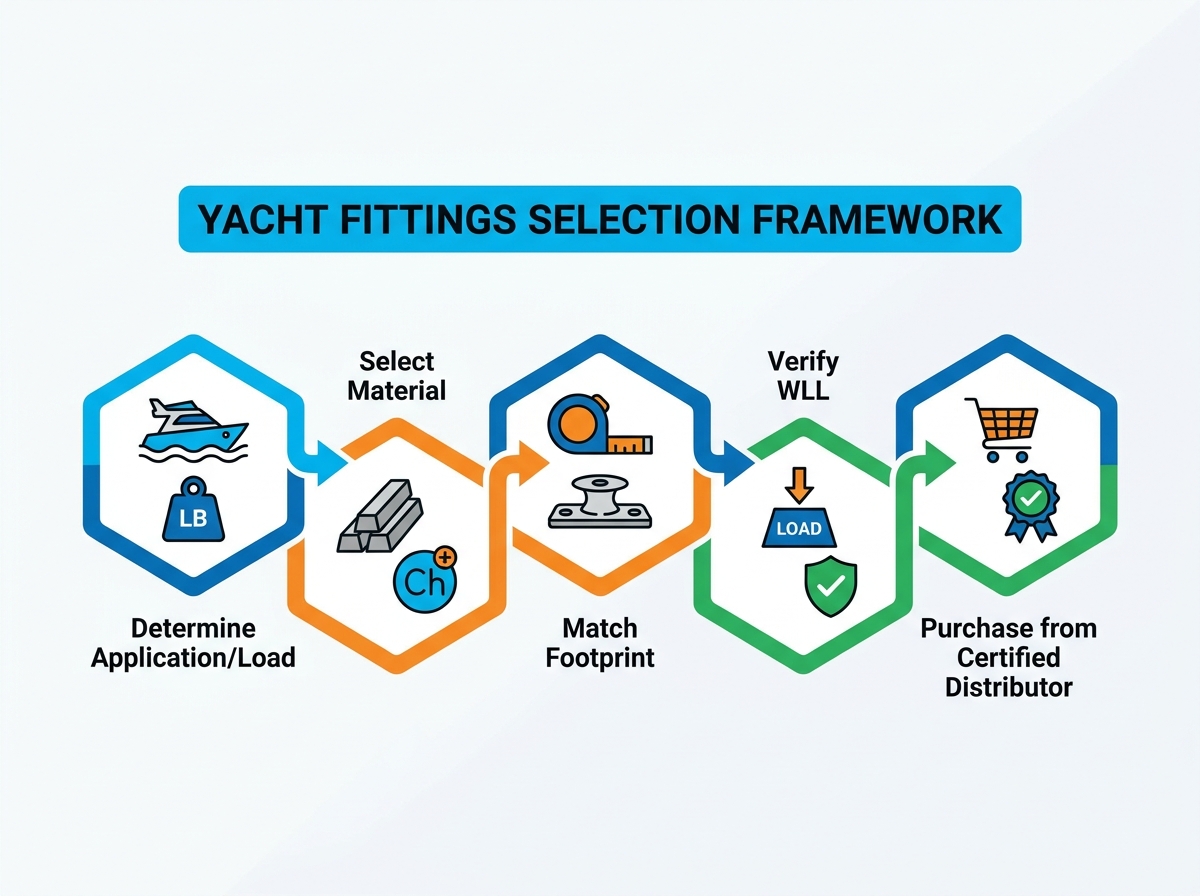
Follow this strict shortlisting logic framework:
- Determine the specific application and calculate the maximum potential load.
- Select the most appropriate material for the surrounding corrosive environment.
- Match the physical footprint closely to your existing deck layout.
- Verify the Working Load Limit (WLL) easily exceeds your anticipated needs.
- Purchase the finalized components exclusively from a certified distributor.
Conclusion
Reliable yacht fittings require prioritizing metallurgical integrity over initial cost savings. Accurate load-rating calculations prevent dangerous structural failures at sea. Remember, cheap hardware always proves more expensive in the long run. By insisting on 316 stainless steel, proper backing plates, and verified load limits, you secure your vessel against unpredictable marine environments.
Your next step is to conduct a comprehensive deck and rigging audit. Document all existing bolt patterns and line sizes meticulously. Finally, consult with a certified rigger or reputable marine hardware supplier before making any bulk purchasing decisions. Protect your vessel by investing smartly today.
FAQ
Q: What is the difference between working load limit (WLL) and breaking strength?
A: The Working Load Limit (WLL) is the maximum safe operating capacity for a component. Engineers design parts to operate safely within this limit daily. Breaking strength is the ultimate failure point where the metal physically snaps or deforms permanently. WLL is usually a fraction of the breaking strength, providing a vital safety margin. Always base purchases strictly on the WLL.
Q: Can I mix aluminum and stainless steel yacht fittings?
A: Mixing aluminum and stainless steel causes severe galvanic corrosion in saltwater environments. The less noble metal (aluminum) sacrifices itself and corrodes rapidly. If you must mix them, you must use proper isolation techniques. Always apply specialized isolation pastes, nylon washers, or dielectric pads between the two dissimilar metals.
Q: How do I know what size cleat my boat needs?
A: You can determine the proper cleat size using a simple, industry-standard formula. Allow one inch of cleat length for every 1/16 inch of your dock line diameter. For example, a 3/8-inch line requires a 6-inch cleat. Additionally, ensure the chosen cleat accommodates two full figure-eight wraps plus a locking hitch.
Q: Why are my stainless steel deck fittings rusting?
A: Surface oxidation, often called tea-staining, occurs when salt and contaminants sit on the metal. This cosmetic issue is solved by regular polishing. However, structural crevice corrosion happens in oxygen-deprived wet areas, like underneath bolt heads. This compromises the metal internally. Proper marine sealants and routine freshwater washdowns mitigate both issues effectively.