Introduction
Saltwater damages ordinary metal quickly. Boats face moisture, waves, and corrosion every day. Many fittings fail early in harsh marine environments. That is why marine grade hardware is essential for boat safety and durability.
So what is marine grade hardware, and why does it matter? In this article, you will learn the basics of marine grade hardware, common materials, and how corrosion-resistant fittings improve boat performance.
We also introduce reliable marine hardware products from Wudi Zhibo Metal Co., Ltd, trusted for durable stainless steel fittings. Learn more about our marine hardware solutions.
What Is Marine Grade Hardware?
Marine Grade Hardware Definition and Core Characteristics
Marine grade hardware refers to specialized metal fittings designed for marine environments such as boats, ships, docks, and offshore structures. These components must tolerate exposure to saltwater, strong sunlight, mechanical vibration, and temperature changes. Ordinary hardware cannot maintain structural strength under these conditions, which is why marine grade materials are required.
The most important characteristic of marine grade hardware is corrosion resistance. Saltwater contains chlorides that attack metals and accelerate rust formation. Marine hardware materials therefore include protective alloy compositions that resist corrosion and maintain structural stability. These components are also manufactured using precision casting, forging, and polishing techniques to improve durability and reliability.
For boats, marine hardware includes deck fittings, fasteners, rail components, hinges, anchors, and mooring systems. Each of these parts supports the vessel’s operation and safety. When properly designed and installed, marine hardware can function reliably for many years despite constant environmental exposure.
Why Marine Grade Hardware Is Important for Boats
Many boat owners underestimate the importance of hardware components. Small fittings often appear insignificant compared with engines or hull structures. However, these components play critical structural roles in securing parts, supporting loads, and ensuring safe vessel operation.
If inferior hardware is used, corrosion can quickly weaken fittings and fasteners. For example, a corroded hinge may cause hatch failure, while a damaged cleat can break during docking operations. These failures may result in costly repairs or safety hazards for passengers.
High-quality marine hardware for boats solves these problems by using corrosion resistant marine hardware materials. Stainless steel, bronze, and aluminum alloys provide stronger protection against saltwater corrosion and environmental stress. Manufacturers specializing in stainless steel marine hardware often employ precision investment casting and polishing technologies to ensure dimensional accuracy and durability under heavy marine loads.

Marine Grade Hardware Materials
Marine Grade Stainless Steel Hardware
Among all marine grade hardware materials, stainless steel is one of the most widely used materials in marine construction. Stainless steel contains chromium, which forms a protective oxide layer on the metal surface. This layer prevents oxygen and moisture from attacking the metal underneath, greatly reducing corrosion risk.
Marine grade stainless steel hardware is used in many boat components including fasteners, hinges, rail fittings, and deck accessories. It offers high mechanical strength while maintaining corrosion resistance in humid environments.
Because of its durability and relatively low maintenance requirements, stainless steel remains the preferred choice for many marine hardware manufacturers. Proper cleaning and maintenance can allow stainless steel hardware to last for years even in demanding marine environments.
Key Characteristics of Marine Grade Stainless Steel
Property | Description | Benefit |
Corrosion Resistance | Resistant to saltwater exposure | Long service life |
Mechanical Strength | Strong structural performance | Supports heavy loads |
Low Maintenance | Requires simple cleaning | Reduced upkeep costs |
Other Materials Used in Marine Hardware
While stainless steel dominates marine hardware manufacturing, other materials are also used depending on the application. Each material offers unique benefits in strength, weight, and corrosion resistance.
Bronze alloys provide excellent corrosion resistance and are commonly used for underwater fittings and propeller components. Aluminum alloys are lightweight and strong, making them suitable for rail systems and structural fittings. Galvanized steel may be used in freshwater environments where corrosion risk is lower.
Common Marine Hardware Materials
Material | Advantages | Common Applications |
Stainless Steel | Strong corrosion resistance | Deck hardware, fasteners |
Aluminum | Lightweight and durable | Rail systems, fittings |
Bronze | Excellent saltwater resistance | Propellers, underwater parts |
Galvanized Steel | Cost-effective | Freshwater dock hardware |
Selecting the right material ensures marine hardware performs effectively in specific environmental conditions.
Types of Marine Hardware for Boats
Deck Hardware Components
Deck hardware refers to fittings installed on the upper surfaces of boats. These components assist with navigation, mooring, safety, and general vessel operation. Deck hardware must withstand constant exposure to salt spray, sunlight, and mechanical stress.
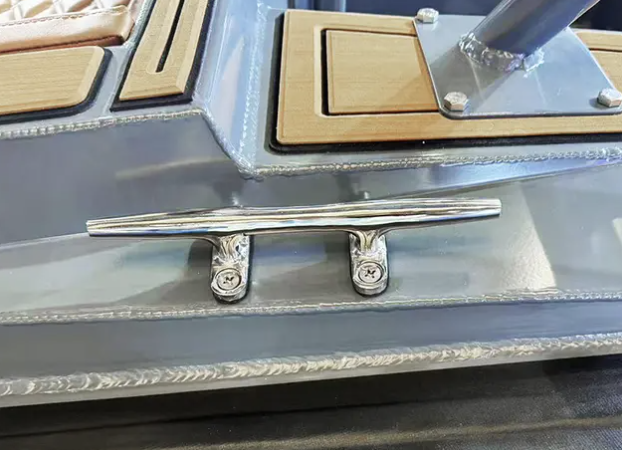
Typical deck hardware includes cleats, deck plates, rail fittings, hatches, and hinges. These components help secure ropes, support equipment, and provide access to interior compartments. Because they are exposed to weather conditions, deck hardware is usually made from corrosion resistant marine hardware materials.
Using marine grade stainless steel hardware ensures that these fittings remain functional even after prolonged exposure to saltwater environments.
Marine Fasteners and Structural Hardware
Marine fasteners are essential for connecting structural components on boats. These include bolts, screws, nuts, washers, and anchors used in various installation applications. Unlike standard fasteners, marine fasteners must resist corrosion and maintain strong mechanical connections.
Fasteners secure deck equipment, mount engines, support railings, and attach structural fittings. Their strength directly affects vessel stability and safety. Poor quality fasteners may loosen or corrode, leading to equipment failure.
Types of Marine Fasteners
Fastener Type | Function | Typical Boat Use |
Bolts | Secure structural components | Engine mounts, deck structures |
Screws | Attach lighter materials | Panels, cabinets |
Nuts and Washers | Lock connections | Structural assemblies |
Anchors | Heavy-duty mounting | Dock and marine installations |
Mooring and Anchoring Hardware
Mooring hardware plays a critical role in securing boats at docks or anchor points. These components must withstand significant loads caused by waves, currents, and wind.
Examples of mooring hardware include cleats, shackles, chain plates, and anchor connectors. These parts experience continuous stress and must remain strong even after long exposure to marine conditions.
Using high-strength marine hardware materials ensures these components remain reliable and prevent accidents during docking operations.
Marine Fasteners vs Regular Fasteners
Key Differences in Corrosion Resistance
One of the most significant differences between marine fasteners and standard fasteners is corrosion resistance. Regular fasteners are typically designed for dry indoor environments. When exposed to saltwater, these components quickly develop rust and lose structural strength.
Marine fasteners are specifically manufactured to resist moisture and salt exposure. Materials such as stainless steel, bronze, and specialized alloys provide stronger resistance against corrosion.
Using regular fasteners on boats may initially appear cost effective. However, corrosion damage often leads to frequent replacements and higher long-term costs.
Material Selection for Marine Fasteners
Selecting the correct fastener material is essential for marine environments. Stainless steel remains the most widely used material due to its corrosion resistance and mechanical strength.
Bronze fasteners are also used in underwater components because of their resistance to marine organisms and corrosion. Aluminum fasteners may be selected when lightweight structures are required.
Applications of Marine Fasteners on Boats
Marine fasteners support many essential operations on boats. They secure structural panels, mount equipment, attach deck fittings, and stabilize mechanical systems. Their reliability directly affects vessel performance.
Fasteners are also used to connect railings, ladders, and anchor systems. Because these parts experience constant vibration and movement, strong and corrosion resistant marine fasteners are required.

Environmental Factors Affecting Marine Hardware
Saltwater Corrosion
Saltwater is one of the most destructive elements for metal components. Chloride ions penetrate metal surfaces and break down protective layers, leading to corrosion and structural damage.
Marine grade hardware materials are specifically engineered to resist this process. Stainless steel alloys and bronze materials provide higher resistance to chloride corrosion, helping hardware maintain strength over time.
UV Exposure and Weather Conditions
Marine hardware is constantly exposed to sunlight and weather changes. Ultraviolet radiation can degrade certain materials, while temperature fluctuations can cause expansion and contraction in metal parts.
High quality marine hardware must therefore withstand both chemical corrosion and environmental stress. Protective coatings and corrosion resistant alloys help maintain long-term durability.
Mechanical Stress and Vibration
Boats operate in constantly moving environments. Waves, wind, and engine vibration generate continuous mechanical stress on hardware components.
Marine hardware must be designed to handle these dynamic forces without loosening or breaking. Strong materials and proper installation methods are essential for maintaining structural stability.
How to Identify Marine Grade Hardware
Recognizing Marine Grade Stainless Steel Hardware
One of the easiest ways to identify marine grade hardware is by checking material specifications. High-quality marine hardware is usually labeled according to stainless steel standards and corrosion-resistant alloy compositions.
Hardware designed for marine applications typically features polished surfaces and precise casting structures that improve durability and corrosion resistance.
Evaluating Surface Finishing and Manufacturing Quality
Surface finishing also affects corrosion resistance. Polished surfaces reduce areas where salt and moisture can accumulate, improving hardware longevity.
Precision manufacturing techniques such as casting and polishing also improve structural integrity. Well-manufactured marine hardware tends to perform more reliably in demanding environments.
Certification and Marine Standards
Certain marine hardware products comply with industry standards related to corrosion resistance and mechanical strength. These certifications provide assurance that hardware meets marine performance requirements.
Selecting certified products ensures reliable hardware performance and improves safety in marine applications.
Conclusion
Marine environments damage ordinary metal fast. Marine grade hardware resists salt, stress, and weather. Stainless steel, bronze, and aluminum improve durability and safety. Quality fittings extend boat service life. Products from Wudi Zhibo Metal Co., Ltd offer reliable marine hardware with strong corrosion resistance and stable performance.
FAQ
Q: What is marine grade hardware used for?
A: Marine grade hardware is used on boats and docks. It resists corrosion and saltwater damage, making it ideal for marine environments.
Q: Why is marine grade hardware important for boats?
A: Marine grade hardware prevents rust and structural failure. It ensures safety and durability in harsh saltwater conditions.
Q: What materials are used in marine grade hardware?
A: Marine grade hardware often uses stainless steel, bronze, or aluminum alloys because they provide strong corrosion resistance.
Q: How do you choose marine grade hardware for boats?
A: Choose marine grade hardware with corrosion-resistant materials and high-quality manufacturing for long-lasting marine performance.