Stainless Steel 316 Marine Accessories
60° Rail Base 22 mm & 25 mm – Deck-Ready, Salt-Proof, Life-Proof
Product Snapshot
| Item | Value |
| Model | ZB1804-22 / ZB1804-25 |
| Material | Precision-cast marine-grade SS 316 |
| Tube Fit | 7/8" (22 mm) / 1" (25 mm) |
| Base Angle | 60° fixed |
| Finish | 400-grit mirror polish, Ra ≤0.4 µm |
| Weight | 0.148 kg (22) / 0.173 kg (25) |
| Safe Working Load | 180 kgf per base (3× safety factor) |
| Salt-Spray Rating | >1 000 h ASTM B117 – zero red-rust |
Micro-Dimensions (see drawing)
")

Why It Wins on Deck
| Advantage | Real-World Translation |
| Salt-Water Immunity | Mo-rich 316 steel – no tea-stain, no pitting, even in splash zones |
| 60° Optimum Geometry | Self-draining angle – standing water can’t pool, so crevice corrosion never gets started |
| 4.5 mm Solid Cast Wall | Investment-cast single piece – no weld seams to fail under shock loading |
| Vibration-Proof Footprint | 6 × M6 countersunk holes give 360° clamp – rail stays rock-solid in 6-foot chop |
| Mirror Polish + Electropolish | Surface Ra ≤0.4 µm – salt has nowhere to grip; wipes clean with fresh water |
| One-Hand Install | Captive hex bolts supplied (A4-80) – no extra hardware store run |
Application Matrix
| Location | Job | Marine Value |
| Pulpit & Pushpit Rails | End termination for 22 mm life-line posts | Zero weld, zero rust, zero maintenance |
| Bimini & Dodger Frames | Mid-rail support on 25 mm tubing | 60° angle matches canvas geometry – no kinks |
| Deck Solar Panel Legs | Tilt-bar base on 25 mm rail | Holds 20 kg glass panels through 50-knot gusts |
| Radar-Arch Braces | Corner junction for 25 mm arch | Keeps electronics stable, no metal fatigue |
| Swim-Platform Handrails | 22 mm safety rail end | Survives 24/7 salt dunk & UV |
| Bow/Stern Flag-Pole Sockets | Angled 60° receiver | Flag stays proud, pole never wobbles |
FAQ
Q: 304 vs 316 – still confused?
A: 304 = freshwater fine; 316 = molybdenum inside, saltwater bulletproof.
Q: Can I weld this base?
A: It’s cast 316 – TIG weldable, but you’ll kill the mirror finish; mechanical fit is faster & stronger.
Q: Will it fit 25.4 mm (1") imperial tube?
A: ZB1804-25 is machined for 25.0 mm; a 0.4 mm shim wrap gives perfect grip on 1" OD.
Q: Life expectancy?
A: 3 000+ hours continuous salt-spray equals >20 years on deck – we’ve got 8-year real-boat case studies with zero pitting.
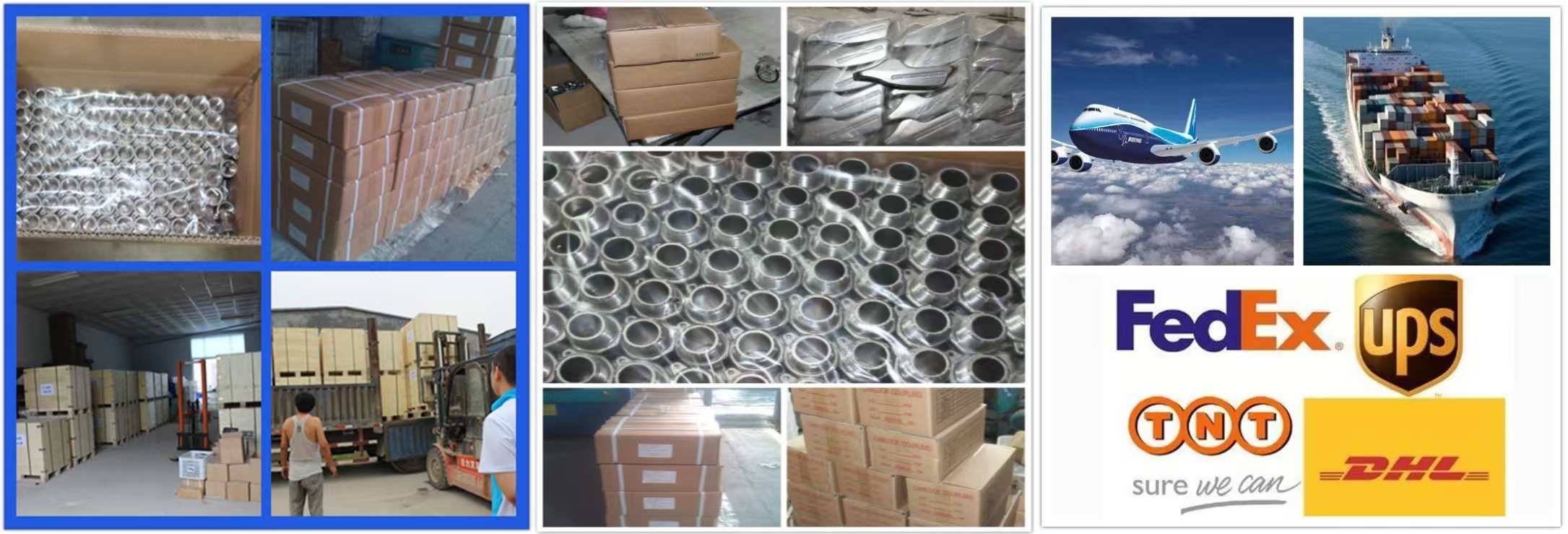
Packing & Delivery

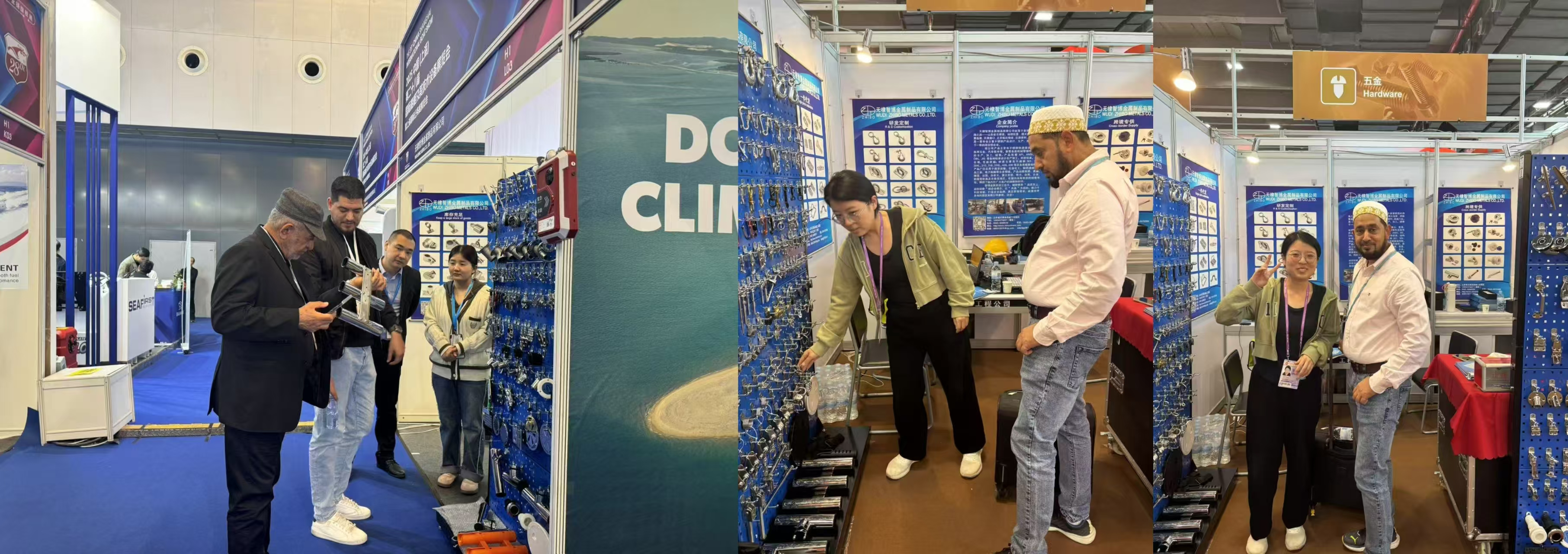
Exhibition

1. Why does stainless steel have magnetism?
Often, people use magnets to test the quality of stainless steel. If a magnet doesn't attract and has no magnetism, it is genuine and of good value. On the contrary, it is regarded as a counterfeit. In fact, this is an extremely one-sided and unrealistic method of wrong identification.
Austenitic stainless steel is non-magnetic or weakly magnetic. Martensitic or ferritic stainless steel is magnetic. However, when austenitic stainless steel undergoes cold working, the microstructure of the processed area will also transform into martensite. The greater the degree of processing deformation, the more martensitic transformation occurs and the greater the magnetic property. The material of the product will not change. More professional methods should be adopted to test the material of stainless steel. (Spectral detection, stainless steel identification liquid detection).
2. Why does stainless steel rust?
a. When dust containing other metal elements or particles of dissimilar metals accumulate on the surface of stainless steel, in a humid environment, the condensate water between the adherent and the stainless steel forms a micro-battery, triggering an electrochemical reaction and damaging the protective film. This is known as electrochemical corrosion.
b. When organic substances such as vegetable juice, noodle soup, and phlegm adhere to the surface of stainless steel, they form organic acids in the presence of water and oxygen. Over a long period of time, these organic acids will corrode the metal surface.
c. The stainless steel surface adheres to substances containing acids, alkalis and salts (such as splashed alkali water and lime water during wall decoration), causing local corrosion.
d. In polluted air (such as that containing large amounts of sulfides, carbon oxides, and nitrogen oxides), upon encountering condensation water, liquid spots of sulfuric acid, nitric acid, and acetic acid are formed, causing chemical corrosion.