Product Overview
Stainless Steel 304 Tubs Thimble – Model ZB7202 Series
RICHWITS ZB7202 delivers a premium-grade, precision-formed tubs thimble engineered for heavy-duty wire rope protection, industrial rigging, and commercial marine applications.
Investment-cast from high-quality 304 stainless steel, then CNC-machined and hand-polished for superior corrosion resistance, durability, and professional appearance in demanding environments.
Tubs-style deep-groove design: cradles wire rope securely, maximizes bearing surface, prevents pinching and deformation—essential for high-load wire rope terminations and permanent rigging installations.
Multiple sizes (6mm–15 mm rope diameter) accommodate standard wire ropes; robust wall thickness delivers exceptional load distribution—perfect for crane operations, lifting slings, architectural rigging, or heavy marine mooring.


Key Features & Benefits
304 SS Investment-Cast Body – zero welds, zero porosity, exceptional structural integrity under shock and sustained loading.
Hand-Polished Smooth Interior – deep tubs groove with precision radius; eliminates stress concentration points, extends wire rope service life by 50%.
Reinforced Heavy-Duty Walls – thicker cross-section than standard thimbles; withstands crushing forces in high-tension applications.
Seamless Construction – no split lines or casting seams to compromise rope; continuous surface maintains optimal rope geometry.
Excellent Processing Performance – compatible with swaging, clipping, or splicing methods; easy integration into complete rigging systems.
Excellent Welding Performance – 304 grade offers superior weldability for permanent installation or custom structural connections.
Cost-Effective 304 Grade – optimal balance of corrosion resistance and economy for freshwater, industrial, or moderate marine environments.
Product Uses
Tubs thimble for heavy lifting slings and crane operations
Industrial thimble stainless steel for factory rigging and material handling
Marine thimble for mooring lines, anchor rodes, and tow cables
Architectural thimble for cable railing systems and tensile structures
Mining thimble for haulage and hoisting applications
Construction thimble for tower cranes, elevators, and suspended platforms
Product Advantage
High resilience, unlikely to break – ductile 304 SS withstands dynamic loading and impact without fracture.
Excellent processing performance – easy to shape into complete rope assemblies with standard ferrules, sockets, or clips.
Excellent welding performance – secure connection to anchor points, turnbuckles, or structural steel frameworks.
Excellent antioxidant properties – surface not prone to rusting in normal atmospheric and freshwater conditions; maintains function and appearance.
Why Choose RICHWITS
Factory-Direct – wholesale only, 35% cost saving vs. forged or 316 alternatives
100% Inspection – each piece visually and dimensionally inspected before shipment
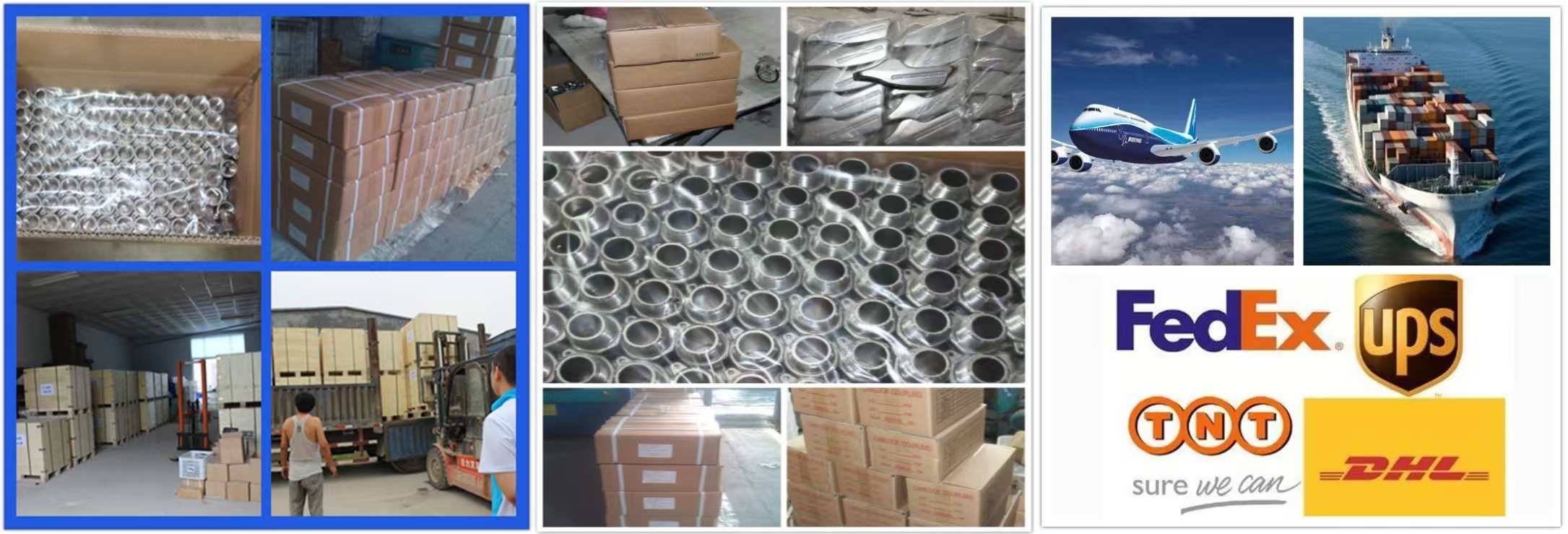
In-Stock Inventory – 600,000 pcs across all sizes; MOQ 300 pcs; 48-hour dispatch
Fast Logistics – FedEx/UPS/DHL global 3-7 day delivery
OEM & ODM – custom groove profiles, special sizes, or laser marking available within 2 weeks
FAQ
Why does stainless steel rust?
a. When dust containing other metal elements or particles of dissimilar metals accumulate on the surface of stainless steel, in a humid environment, the condensate water between the adherent and the stainless steel forms a micro-battery, triggering an electrochemical reaction and damaging the protective film. This is known as electrochemical corrosion.
b. When organic substances such as vegetable juice, noodle soup, and phlegm adhere to the surface of stainless steel, they form organic acids in the presence of water and oxygen. Over a long period of time, these organic acids will corrode the metal surface.
c. The stainless steel surface adheres to substances containing acids, alkalis and salts (such as splashed alkali water and lime water during wall decoration), causing local corrosion.
d. In polluted air (such as that containing large amounts of sulfides, carbon oxides, and nitrogen oxides), upon encountering condensation water, liquid spots of sulfuric acid, nitric acid, and acetic acid are formed, causing chemical corrosion.