Marine yacht fishing boat 304 stainless steel hinge
Heavy duty stainless steel cabinet hinge , door hinge, marine hinge
1. shining look, smooth surface
2. good performance on rust and corrosion resistance
3. wide usage: perfect for cabinet, door , window, ect.
4 high mirror polished
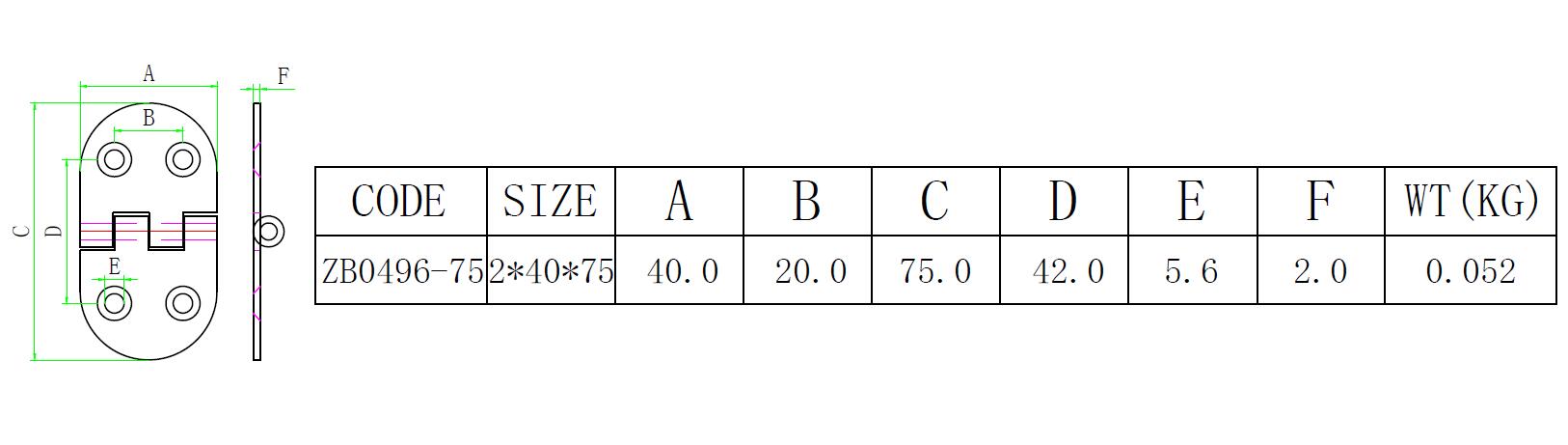
size : 2*40*75 MM
marine hardware, stainless steel hinge
Hardware Stainless Steel Hinges Door Connector Drawer 4 Mounting Holes Durable Furniture Bookcase Window Cabinet Home

1. What’s the difference between 304 and 430 stainless steel?
304 has nickel (non-magnetic, more corrosion-resistant); 430 has no nickel (magnetic, lower cost).
2. How to clean stainless steel without scratching it?
Use a soft cloth + mild dish soap; avoid steel wool or abrasive sponges.
3. If it's "stainless," why does it sometimes rust?
Stainless steel is stain-less, not stain-proof. Rust can occur due to:
· Contamination: Iron or carbon steel particles from tools, dock grit, or nearby grinding can settle on the stainless surface and rust. This is called "surface contamination."
· Crevice Corrosion: In tight, oxygen-deprived spaces (under a bolt head, inside a threaded fitting), the protective layer can break down, leading to corrosion.
· Galvanic Corrosion: When stainless steel is electrically connected to a less noble metal (like aluminum or mild steel) in seawater, the electrolyte (saltwater) causes a current to flow, corroding the less noble metal. The stainless can also be attacked if its potential is shifted.
· Pitting: Chlorides can locally break down the passive layer, causing small, deep pits.
· Low-Quality Alloy: Using 304 instead of 316 in a marine environment will almost certainly lead to corrosion.


