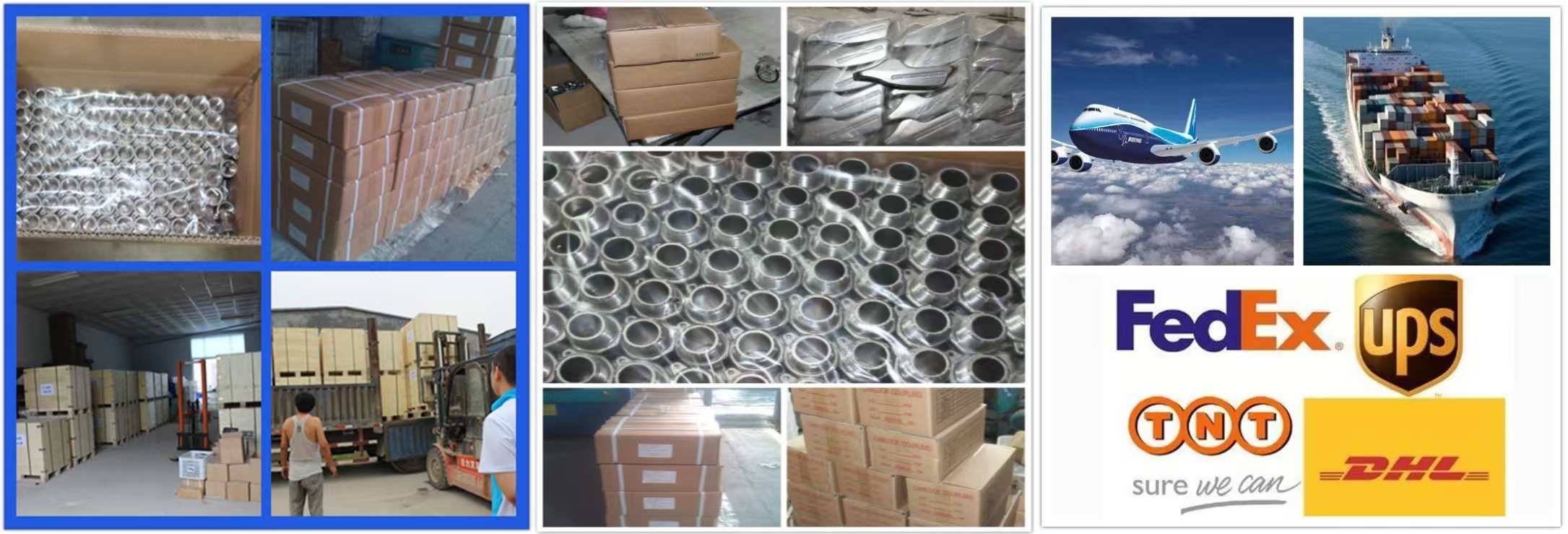
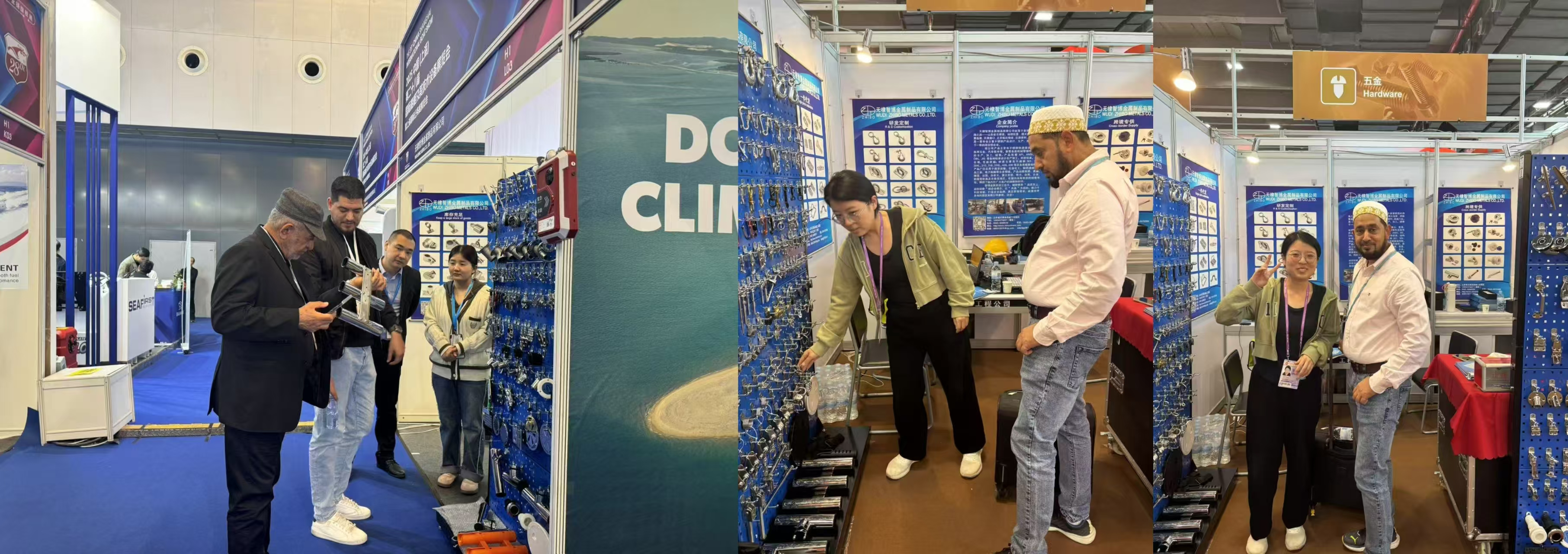
Product Introduction
| Feature | Benefit |
| Anti-Rust | Full-marine 316 SS, molybdenum alloyed, survives permanent salt-spray. |
| Heavy-Duty | 5 mm precision-cast body, one-piece core, rated 150 kgf per base. |
| 45° Exact Bend | CNC-machined angle guarantees seamless rail direction change & elegant sweep. |
| Invisible Fix | Counter-bored holes leave screws flush—no snags on sheets or dock lines. |
| Multi-Size | 22 mm & 25 mm I.D. versions cover standard 7/8" & 1" rail tubing worldwide. |
| Fast Install | M6 × 30 mm 316 screws & hex key included—no extra hardware run. |
Technical Parameters
![ZB1802 45度圆管座-尺寸图]()

Product Advantages
| Advantage | Description |
| Salt & Brackish Immunity | 316 Mo-content resists pitting in tide-wash zones. |
| Cost-Optimized | 316 chemistry at 304 market price—bulk casting savings passed on. |
| Zero Maintenance | Mirror polish self-heals; no re-polish needed after seasons. |
| Shock & Vibration Proof | One-piece casting—no weld cracks under wave impact. |
| Hidden Fixation | Countersunk holes keep lines and sails snag-free. |
| Longevity | 5-year no-red-rust warranty in normal marine atmosphere. |
Application Matrix
| Application | Function | Marine Value |
| Bow & Stern Rails | 45° direction change | Keeps lifeline sweep smooth & corrosion-free |
| T-Top & Bimini Frames | Mid-rail support brace | Survives 24/7 UV & salt combo |
| Grab Rails on Cabin sides | Elevation transition | Safe handhold, no wobble after years |
| Radar-Arch Bases | Load transfer | Takes antenna weight + windage |
| Swim-Platform Rails | Angle return | Zero sharp edges, safe for swimmers |
| Yacht Push-Pit Rails | Life-gate alignment | Failsafe angle keeps gate perfectly aligned |
Packing & Delivery

Exhibition

FAQ
1. Why does stainless steel have magnetism?
Often, people use magnets to test the quality of stainless steel. If a magnet doesn't attract and has no magnetism, it is genuine and of good value. On the contrary, it is regarded as a counterfeit. In fact, this is an extremely one-sided and unrealistic method of wrong identification.
Austenitic stainless steel is non-magnetic or weakly magnetic. Martensitic or ferritic stainless steel is magnetic. However, when austenitic stainless steel undergoes cold working, the microstructure of the processed area will also transform into martensite. The greater the degree of processing deformation, the more martensitic transformation occurs and the greater the magnetic property. The material of the product will not change. More professional methods should be adopted to test the material of stainless steel. (Spectral detection, stainless steel identification liquid detection).
2. Why does stainless steel rust?
a. When dust containing other metal elements or particles of dissimilar metals accumulate on the surface of stainless steel, in a humid environment, the condensate water between the adherent and the stainless steel forms a micro-battery, triggering an electrochemical reaction and damaging the protective film. This is known as electrochemical corrosion.
b. When organic substances such as vegetable juice, noodle soup, and phlegm adhere to the surface of stainless steel, they form organic acids in the presence of water and oxygen. Over a long period of time, these organic acids will corrode the metal surface.
c. The stainless steel surface adheres to substances containing acids, alkalis and salts (such as splashed alkali water and lime water during wall decoration), causing local corrosion.
d. In polluted air (such as that containing large amounts of sulfides, carbon oxides, and nitrogen oxides), upon encountering condensation water, liquid spots of sulfuric acid, nitric acid, and acetic acid are formed, causing chemical corrosion.