Product Overview
The ZB6607 Pulley Block (25 mm) is a heavy-duty, marine-grade wire-rope sheave engineered by RICHWITS for smooth, reliable lifting, towing and suspension.
CNC-machined from solid 304 stainless steel and fitted with a sealed ball-bearing bush, this compact wheel delivers ultra-low friction and whisper-quiet operation even under full load.
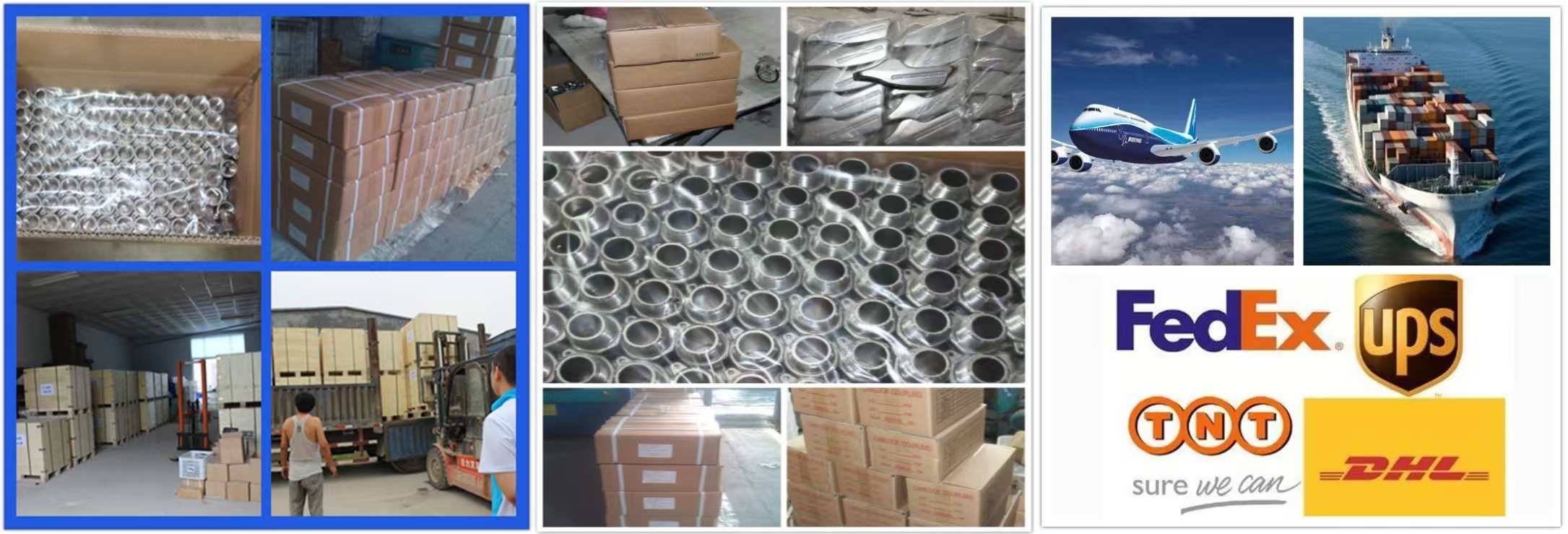
100 pcs are ready to ship with a low MOQ, so you can prototype tomorrow or replenish stock next week without tying up cash.
Key Features & Benefits
| Feature | Advantage |
| Dual-grade SS304 | Immune to rust in salt spray, chlorine pools or acid rain; mirror polish keeps your rig looking yacht-ready. |
| Sealed ball-bearing | 30 % less pull-force vs. bronze-bushed wheels; maintenance-free for 5 years in normal marine use. |
| Precision CNC groove | Radiused to match 3–8 mm wire rope, preventing kinks and extending rope life by up to 40 %. |
| Side-load safety tabs | Stops the rope from jumping the wheel when the lead angle changes suddenly—critical for towing & lifting. |
| Tool-free axle | Quick-release stainless pin with captive split ring—swap wheels in seconds, no spanners required. |
Technical Specifications


Usage Scenarios
| Scene | How it excels |
| Marine deck & mast | Halyard, spinnaker sheet, dinghy towing or anchor retrieval—zero rust, zero squeak. |
| Crane & hoist retrofits | Drop-in upgrade for old steel or nylon wheels; halves manual pulling effort. |
| Shade sail & awning | Keeps tensioning lines tidy and corrosion-free in coastal patios. |
| Gym cable machines | Silent, smooth reps; stainless construction won’t flake chrome like economy wheels. |
| Theatre & camera rigs | Low-noise operation for fly systems, slider tracks or drone line guidance. |
FAQ
Q: Why does stainless steel have magnetism?
A: Often, people use magnets to test the quality of stainless steel. If a magnet doesn't attract and has no magnetism, it is genuine and of good value. On the contrary, it is regarded as a counterfeit. In fact, this is an extremely one-sided and unrealistic method of wrong identification.
Austenitic stainless steel is non-magnetic or weakly magnetic. Martensitic or ferritic stainless steel is magnetic. However, when austenitic stainless steel undergoes cold working, the microstructure of the processed area will also transform into martensite. The greater the degree of processing deformation, the more martensitic transformation occurs and the greater the magnetic property. The material of the product will not change. More professional methods should be adopted to test the material of stainless steel. (Spectral detection, stainless steel identification liquid detection).
Q: Why does stainless steel rust?
A: a. When dust containing other metal elements or particles of dissimilar metals accumulate on the surface of stainless steel, in a humid environment, the condensate water between the adherent and the stainless steel forms a micro-battery, triggering an electrochemical reaction and damaging the protective film. This is known as electrochemical corrosion.
b. When organic substances such as vegetable juice, noodle soup, and phlegm adhere to the surface of stainless steel, they form organic acids in the presence of water and oxygen. Over a long period of time, these organic acids will corrode the metal surface.
c. The stainless steel surface adheres to substances containing acids, alkalis and salts (such as splashed alkali water and lime water during wall decoration), causing local corrosion.
d. In polluted air (such as that containing large amounts of sulfides, carbon oxides, and nitrogen oxides), upon encountering condensation water, liquid spots of sulfuric acid, nitric acid, and acetic acid are formed, causing chemical corrosion.
Packaging & Delivery

Exhibition