Introduction
Why does marine hardware last in saltwater while ordinary metal fails quickly? Marine hardware must resist corrosion and constant exposure to harsh environments. In this article, you will learn what marine hardware is made of, including stainless steel, bronze, and aluminum, and see examples such as the durable marine hardware products offered by Wudi Zhibo Metal Co., Ltd.
What Is Marine Hardware Made Of?
Marine hardware is generally manufactured from metals designed to withstand water exposure and corrosion. The most common base material is marine-grade stainless steel, although other metals are widely used depending on strength requirements and application conditions.
Marine-Grade Stainless Steel
Stainless steel is widely used in marine hardware because it provides excellent corrosion resistance and structural strength. Its chromium content creates a protective oxide layer on the metal surface. This layer prevents rust and protects the hardware from chemical damage caused by seawater.
Many modern marine fittings, including shackles, hinges, deck fillers, and rigging components, are produced using precision investment casting and stainless steel alloys, a process widely used by specialized manufacturers of marine hardware.
Marine-Grade Aluminum
Marine aluminum alloys offer a strong but lightweight option for certain marine components. Because aluminum weighs significantly less than steel, it is often used in boat structures and deck equipment where weight reduction improves performance.
Marine Bronze and Brass
Bronze and brass are copper-based alloys commonly used in marine environments. These metals resist corrosion and marine growth such as algae or barnacles. Their durability makes them suitable for propellers, pumps, and marine fasteners.
Copper-Nickel Alloys
Copper alloys strengthened with nickel and manganese provide exceptional resistance to seawater corrosion. They are frequently used in piping, valves, and underwater equipment where corrosion protection is essential.
Coated or Alloy Steel
In certain structural applications, carbon steel or alloy steel may be used. However, these steels require protective coatings or alloying elements to prevent corrosion in marine conditions.
Common Materials Used in Marine Hardware
Material | Key Property | Typical Marine Applications |
Stainless Steel | High corrosion resistance | Marine fasteners, rails, fittings |
Aluminum Alloy | Lightweight and durable | Boat structures, ladders |
Bronze | Excellent corrosion resistance | Propellers, pumps |
Brass | Good machinability | Marine valves and piping |
Copper-Nickel Alloy | Biofouling resistance | Seawater piping systems |
Why Material Selection Matters in Marine Hardware
Material selection is one of the most important decisions in marine hardware design. Marine environments are among the most aggressive environments for metals. Continuous contact with water, especially saltwater, accelerates corrosion and weakens structural components.
Saltwater Corrosion
Saltwater contains chlorides that attack many metals. If marine hardware is made from unsuitable materials, corrosion can develop quickly. This corrosion weakens bolts, fittings, and connectors, increasing the risk of equipment failure.
Constant Moisture Exposure
Marine equipment rarely stays dry. Ocean spray, humidity, and condensation constantly expose metal parts to moisture. Over time, even small amounts of water can trigger oxidation and rust in standard metals.
Mechanical Stress and Vibration
Boats and marine structures experience continuous movement. Waves, engine vibration, and heavy loads place stress on hardware components. Therefore, marine hardware materials must provide high tensile strength and fatigue resistance.
Long-Term Durability Requirements
Marine hardware often remains installed for years without replacement. Durable materials reduce maintenance needs and prevent unexpected failures that could lead to costly repairs.
Note: Choosing corrosion-resistant materials early in a project can significantly reduce long-term maintenance costs.

Stainless Steel: The Most Common Marine Hardware Material
Among all marine hardware materials, stainless steel is the most widely used. It combines corrosion resistance, strength, and relatively low maintenance requirements.
Why Stainless Steel Works in Marine Environments
Stainless steel contains chromium, which reacts with oxygen to form a thin protective oxide layer. This passive layer protects the metal surface from corrosion. Even if the surface is scratched, the oxide layer can regenerate.
304 Stainless Steel in Marine Applications
304 stainless steel is widely used in many industrial environments. It contains approximately 18% chromium and 8% nickel. This composition provides good corrosion resistance and high durability. However, in environments with high salt concentration, it may eventually corrode if not properly maintained.
316 Stainless Steel for Marine Hardware
316 stainless steel contains molybdenum, which significantly improves resistance to chloride corrosion. Because of this property, it performs much better than 304 in saltwater environments and is often considered the preferred material for marine hardware.
A2 and A4 Stainless Steel Grades
In marine hardware manufacturing, A2 stainless steel refers to a corrosion-resistant alloy suitable for moderate environments. A4 stainless steel offers improved acid resistance and durability in more aggressive marine conditions.
Many marine hardware manufacturers produce 316 stainless steel shackles, hooks, and deck fittings that meet international standards such as DIN, ANSI, and BS to ensure performance and safety in heavy-duty marine applications.
Comparison of 304 and 316 Stainless Steel
Property | 304 Stainless Steel | 316 Stainless Steel |
Corrosion Resistance | Good | Excellent |
Molybdenum Content | None | Contains molybdenum |
Saltwater Performance | Moderate | Very high |
Typical Use | Indoor or mild marine environments | Saltwater marine hardware |
Tip: For hardware exposed directly to seawater, 316 stainless steel usually provides the best balance of durability and corrosion resistance.
Other Marine Grade Metals Used in Marine Hardware
Although stainless steel is the dominant material, several other metals also play important roles in marine hardware production. Different marine environments require different material properties, so engineers often combine multiple metals to achieve the best balance between corrosion resistance, strength, and weight. These materials are commonly used in both recreational boating equipment and large-scale marine infrastructure.
Marine Aluminum Alloys
Marine aluminum alloys such as 5052, 5083, and 6061 offer excellent strength-to-weight ratios. Their corrosion resistance improves when alloyed with magnesium and chromium, which help protect the metal from oxidation in humid or salty environments. Because aluminum is significantly lighter than steel, it is widely used in marine structures where reducing weight improves fuel efficiency and performance.
Aluminum alloys are commonly used for ship hulls, docks, gangways, and deck structures. In addition to being lightweight, they are also easy to fabricate and weld, which makes them ideal for complex marine engineering projects.
Marine Bronze Alloys
Bronze alloys containing silicon or aluminum are specifically designed for marine environments. These alloys resist corrosion and reduce friction, which makes them ideal for propellers and shaft components. Bronze is also known for its durability and its ability to withstand long-term exposure to seawater without significant degradation.
Another advantage of bronze is its resistance to marine biofouling. Marine organisms such as barnacles and algae are less likely to attach to bronze surfaces compared to other metals. This property makes bronze a popular choice for underwater marine components.
Marine Brass
Marine brass, often called naval brass, contains zinc and tin to improve corrosion resistance. The addition of these elements allows brass to perform better in wet environments and in contact with seawater. Brass also offers excellent machinability, which makes it easier to manufacture precision marine parts.
Because of these properties, marine brass is widely used in valves, pumps, marine connectors, and piping systems. It can also tolerate relatively high temperatures, making it suitable for marine heat exchange equipment.
Copper-Nickel Alloys
Copper-nickel alloys are extremely resistant to seawater corrosion and marine organisms. These materials contain nickel and manganese, which significantly enhance their durability and corrosion resistance. One of their most valuable properties is their ability to resist biofouling.
Copper-nickel alloys are frequently used in desalination systems, seawater pipes, and marine heat exchangers. They are also used in offshore energy systems where seawater flows continuously through piping networks.
Marine Metal Applications by Component
Marine Component | Recommended Material | Reason |
Boat fasteners | Stainless steel 316 | Corrosion resistance |
Propellers | Bronze | Low friction |
Seawater pipes | Copper-nickel | Biofouling resistance |
Structural frames | Aluminum alloy | Lightweight strength |
Key Properties of Marine Hardware Materials
Marine hardware materials must meet several technical requirements to perform reliably in marine conditions. These properties ensure that hardware remains safe, durable, and functional even in harsh offshore environments.
Corrosion Resistance
The most important property of marine metals is corrosion resistance. Saltwater contains chlorides that can quickly attack metals without protective alloying elements. Marine-grade metals contain specific chemical elements that help prevent oxidation and rust.
Mechanical Strength
Marine hardware must withstand heavy loads and continuous motion. Equipment such as deck fittings, anchors, and rigging components experience constant mechanical stress from waves, wind, and vessel movement. Strong materials prevent deformation, cracking, or structural failure.
Biofouling Resistance
Marine organisms such as algae, barnacles, and mussels can attach to submerged equipment. This biological buildup can damage surfaces and reduce system efficiency. Certain alloys, especially copper-based metals, naturally resist biological growth.
Long Service Life
High-quality marine hardware materials are designed for long operational lifespans. Durable materials reduce maintenance frequency and minimize replacement costs. This is particularly important for offshore equipment that is difficult to access.
Note: Marine engineers often choose materials based on both corrosion resistance and mechanical performance.

Common Applications of Marine Hardware Materials
Marine hardware materials are used in a wide range of marine equipment and structures. Each material is selected according to the operational requirements and environmental exposure of the component.
Deck and Rigging Hardware
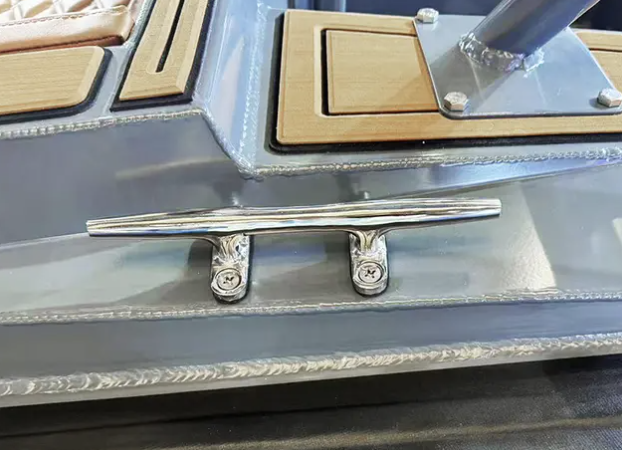
Boat cleats, railings, hinges, shackles, and deck fittings are commonly made from stainless steel or bronze because they must resist corrosion and support heavy loads. These components play a key role in vessel safety and structural stability.
Marine Fasteners
Bolts, screws, and nuts hold together many marine components. Stainless steel fasteners are preferred because they maintain strength even in wet environments. Marine fasteners must also resist vibration and repeated mechanical stress.
Structural Marine Equipment
Shipbuilding and offshore platforms often use aluminum or alloy steel for structural components. These materials provide strength while reducing total vessel weight. Aluminum is especially useful in high-speed vessels where weight reduction improves performance.
Mechanical Systems
Pumps, valves, pipes, and heat exchangers often use copper alloys because they resist corrosion and biological buildup. These systems are essential for fluid transport, cooling, and desalination in marine operations.
Tip: When selecting marine fasteners, matching the metal type to surrounding materials helps prevent galvanic corrosion.
How to Choose the Best Materials for Marine Hardware
Selecting the correct marine hardware material depends on environmental and operational factors. Choosing the right material ensures long-term durability and operational safety.
Saltwater vs Freshwater Conditions
Saltwater is much more corrosive than freshwater. Equipment used in ocean environments typically requires higher-grade metals such as 316 stainless steel or specialized marine alloys.
Load and Structural Requirements
Components that support heavy loads need stronger materials. Stainless steel and alloy steel often provide the necessary strength and durability for demanding marine applications.
Cost and Lifecycle Value
Some materials may cost more initially but provide longer service life. Investing in higher-grade marine metals can reduce replacement frequency and maintenance costs over time.
Maintenance Considerations
Materials that require less maintenance are preferred for offshore installations where maintenance access is difficult. Corrosion-resistant alloys can significantly reduce inspection and repair needs.
Maintaining Marine Hardware for Long-Term Performance
Even corrosion-resistant marine hardware requires regular maintenance to ensure long service life. Proper care helps preserve the protective properties of marine metals.
Rinse with Fresh Water
After exposure to saltwater, rinsing hardware with fresh water removes salt deposits. This helps maintain the protective oxide layer on stainless steel surfaces.
Dry Components After Cleaning
Drying hardware prevents water spots and reduces the risk of corrosion, especially for lower-grade stainless steel components.
Use Proper Cleaning Products
Stainless steel cleaners help remove contaminants and maintain surface protection. Abrasive tools should be avoided to prevent damage to protective layers.
Inspect Hardware Regularly
Routine inspection helps identify early signs of corrosion or wear. Early maintenance prevents small issues from becoming serious failures.
Future Trends in Marine Hardware Materials
The marine industry continues to improve materials used in marine hardware. Advances in metallurgy and manufacturing technology are creating stronger and more corrosion-resistant materials.
Advanced Stainless Steel Alloys
New stainless steel alloys offer improved corrosion resistance and strength for offshore environments. These materials are increasingly used in heavy-duty marine engineering projects.
Lightweight Marine Materials
Lightweight alloys help reduce vessel weight, improving fuel efficiency and operational performance. Aluminum and composite materials are becoming more common in modern ship design.
Improved Protective Coatings
Modern coating technologies add an extra layer of protection to metal surfaces. Advanced coatings can significantly extend the service life of marine hardware.
Sustainable Material Production
Manufacturers are exploring environmentally friendly production methods for marine metals. Sustainable material development is becoming increasingly important as the marine industry focuses on reducing environmental impact.
Conclusion
Marine hardware uses corrosion-resistant metals like stainless steel, aluminum, bronze, and copper alloys to provide strength and durability in harsh environments. Products from Wudi Zhibo Metal Co., Ltd deliver reliable marine hardware solutions using high-quality materials and advanced precision casting service, helping ensure accurate components, long service life, and stable performance in demanding marine conditions.
FAQ
Q: What is marine hardware made of?
A: Marine hardware is made from corrosion-resistant materials such as marine grade stainless steel, bronze, aluminum, and copper alloys designed for harsh marine environments.
Q: Why is stainless steel used in marine hardware?
A: Marine hardware stainless steel, especially 304 and 316 grades, resists saltwater corrosion and maintains strength in demanding marine conditions.
Q: What materials are best for marine hardware?
A: The best materials for marine hardware include marine grade stainless steel, bronze, and aluminum because they provide durability and corrosion resistance.
Q: How do you choose the right marine hardware materials?
A: Choose corrosion resistant marine hardware materials based on saltwater exposure, load requirements, and the type of marine application.