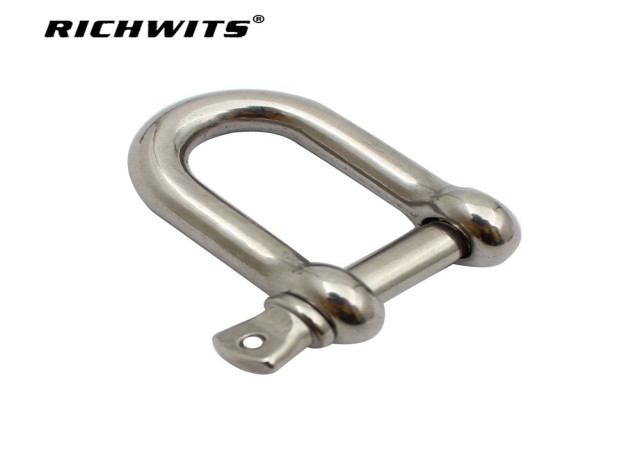
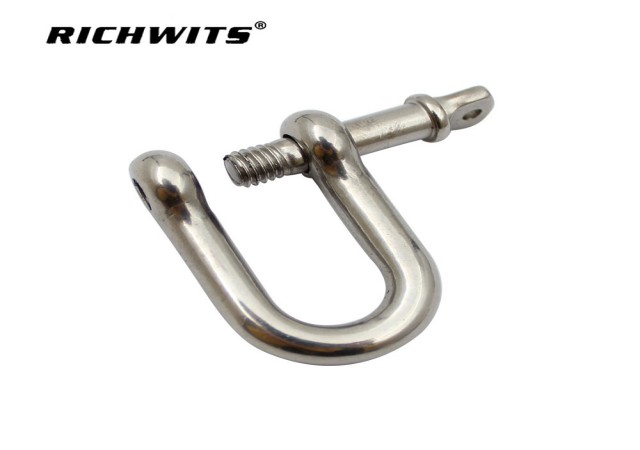
A marine shackle looks small, but a single failure can compromise your anchor or rigging. It is a load-bearing connector in Marine Hardware that links chains, ropes, and fittings. In this article, you will learn where it is used, how to choose it, and when stainless steel yacht fittings make the better option.
What a Marine Shackle Is—and Where It Fits in Marine Hardware
The clearest answer to “what is a marine shackle?”

A marine shackle is a load-bearing connector used to join anchors, chains, ropes, and fittings in marine applications. In practical terms, it is the small metal link that often makes a larger system work: the anchor stays attached to the chain, the mooring setup remains secure, or a rigging connection holds under load. Most marine shackles are designed for strength, repeated exposure to water, and reliable fastening through a removable pin, which makes them both strong and serviceable in day-to-day boating use.
The term can cause confusion because “shackle” also has a nautical measurement meaning in anchor-chain handling. However, when people search “what is a marine shackle,” they usually mean the hardware component rather than the chain-length unit. That distinction matters because the hardware shackle should be understood as part of a broader Marine Hardware system. It is not just a standalone accessory; it works together with chain, rope, swivels, thimbles, pad eyes, and deck fittings. A shackle that is too weak, poorly matched, or unsuitable for the load can compromise the reliability of the entire connection.
Where boat owners actually use marine shackles
Boat owners use marine shackles anywhere a secure but removable connection is needed. The most familiar example is the anchor-to-chain connection, where the shackle becomes a critical link in the ground tackle system. They are also common in mooring arrangements, towing points, sailboat rigging, and deck attachment points where hardware may need to be disconnected for inspection, storage, or replacement. The same product category serves different onboard jobs, but each job places different demands on the shackle. Some applications need better articulation, while others depend more on straight-line strength, corrosion resistance, secure pin retention, or quick removal during maintenance.
Typical onboard use | What matters most |
Anchor to chain connection | Strength, corrosion resistance, pin security |
Mooring setup | Load stability, compatibility with rope or chain fittings |
Towing point | High load capacity, reliable alignment under pull |
Rigging link | Freedom of movement, secure fastening, easy inspection |
Deck attachment point | Compact fit, durability, ease of removal when servicing |
In other words, a marine shackle is less defined by its shape alone than by the job it performs inside a working marine connection.
How to Choose the Right Marine Shackle for the Job
Bow shackle vs. D shackle: which shape matches your load?
Choosing the right marine shackle starts with load path, not appearance. A bow shackle, sometimes called an anchor shackle, has a wider rounded body that allows more movement between connected parts. That makes it the better choice when the connection may shift under load, when multiple components need to sit inside the shackle, or when perfect in-line alignment cannot always be guaranteed. In anchoring systems, mooring arrangements, and some rigging setups, that extra articulation helps the connection work more naturally instead of forcing the load into a narrow line.
A D shackle, also known as a chain shackle, is narrower and better suited to straight, controlled pulls. Its more compact shape limits movement inside the body, which is useful when the load is expected to stay in line from pin to crown. That makes it a strong practical choice for chain-to-chain joins, fixed attachment points, and other setups where alignment is stable. In other words, the real question is not which shape is “better” in general, but which one better matches how force will travel through your connection on the boat.
Which pin style is best for your setup?
Pin design affects security just as much as shackle shape. A screw pin shackle is popular because it is easy to install, easy to remove, and convenient when a connection may need to be opened regularly. That makes it useful for temporary setups, seasonal adjustments, and general onboard hardware that is inspected often. The tradeoff is that repeated vibration, anchor movement, or long-term loading can increase the chance of the pin backing out if it is not properly secured.
A bolt-type shackle is a better fit for semi-permanent or safety-critical connections. Because it uses a bolt, nut, and retaining element, it offers more security in high-vibration conditions and in applications where accidental loosening would be a serious problem. Captive pin designs solve a different issue: they help prevent the pin from being dropped or lost during handling, which can be especially useful on deck or over water. The best choice depends on how often the connection will be opened, how much movement it will see, and how easy it must be to inspect in service.
Pin style | Best suited for | Main advantage |
Screw pin | Temporary or frequently opened connections | Fast installation and removal |
Bolt-type | Semi-permanent or vibration-prone setups | Higher security against loosening |
Captive pin | On-deck handling where pin loss is a risk | Pin stays attached during opening |
How to choose the right size, fit, and working load
Size should never be chosen by eye alone. A marine shackle has to fit the chain, rope termination, thimble, swivel, or deck fitting it connects to, but physical fit is only half of the decision. The other half is working load. A shackle may pass through the hardware cleanly and still be a poor choice if its load rating does not match the demands of the system. This is why a proper selection process looks at fit and working load limit together rather than treating them as separate checks.
It also helps to remember that the way force is applied changes performance. A shackle selected for straight-line loading may lose effectiveness when the load arrives from the side or at an angle. That is why side loading is more than a technical detail: it changes how the shackle body and pin carry force, and it can turn a seemingly strong connection into a weak point. Before choosing a size, check these points:
● whether the pin diameter matches the connected chain or fitting without forcing the fit
● whether the shackle body has enough space for movement without crowding the connection
● whether the working load limit suits the real operating load, not just ideal conditions
● whether the expected load direction stays in line or may shift underway
Stainless steel yacht fittings or galvanized hardware?
Material choice should follow the job and the environment. Stainless steel yacht fittings are often preferred for exposed deck use because they combine strong corrosion resistance with a cleaner finish and a more refined appearance. They are a common choice where fittings remain visible, are handled regularly, or are expected to hold up well in wet and salty conditions without frequent replacement.
Galvanized shackles are often more practical in anchor and chain systems, especially where durability, compatibility with galvanized chain, and cost efficiency matter more than appearance. This is why many working anchor setups continue to rely on galvanized hardware rather than switching every connection to stainless steel. The important caution is not simply choosing one material over another, but avoiding careless mixing. In saltwater, dissimilar metals can accelerate galvanic corrosion, so the shackle should be considered as part of the whole connection rather than as an isolated piece of hardware.
Common Mistakes That Cause Marine Shackle Problems
Using the wrong shackle for the load path
One of the most common mistakes is choosing a shackle by size or appearance without thinking about how force will actually move through it. A marine shackle may look strong enough on deck, yet still perform poorly if the load is not applied in the way the design expects. This often happens when a narrow D shackle is used in a connection that needs more articulation, or when a bow shackle is installed in a way that encourages uneven force across the body and pin. In both cases, the problem is not always the metal itself, but the mismatch between shape and load path.
Poor alignment creates the same kind of risk. If connected parts twist, bind, or pull at an angle, the shackle stops working as efficiently as its rating suggests. Side loading is especially problematic because it changes how force is distributed through the crown and pin. A hardware choice that seems heavy-duty in isolation can become the weak point of the system once the pull shifts off axis. For anchor gear, mooring connections, and rigging points, selecting the right shackle means matching the hardware to the real movement of the setup, not just the maximum load printed in a catalog.

Ignoring corrosion and metal compatibility
Another frequent mistake is focusing only on strength while ignoring how the shackle will behave in a marine environment over time. Saltwater does not just cause visible surface damage; it can also accelerate galvanic corrosion when dissimilar metals are placed in direct contact. In practical terms, that means a connection may begin to deteriorate faster simply because the shackle, chain, swivel, or adjacent fitting were not chosen as a compatible set.
This is why material matching matters as much as material quality. A stainless shackle may seem like an upgrade at first glance, but if it is paired carelessly with galvanized chain or other incompatible fittings, the result can be faster wear in the surrounding components. The danger here is that the assembly may still look serviceable for a while, which encourages people to keep using it longer than they should. A shackle in marine service has to be judged as part of a working connection exposed to water, salt, movement, and time.
Missing the early signs of wear or failure
Early damage is often visible before total failure, but it gets overlooked because a shackle is treated like a simple spare part instead of safety-critical hardware. Regular inspection should focus on the body, the pin, the threaded area, and the pin holes, because these are the places where overload, movement, and corrosion tend to show first.
Warning sign | What it usually indicates |
Bent body or visible deformation | Overload or incorrect loading direction |
Elongated pin holes | Repeated stress, wear, or movement under load |
Thread damage | Unsafe pin retention or difficulty achieving full engagement |
Pitting or surface corrosion | Material breakdown in a harsh marine environment |
Cracks | Serious structural weakness requiring immediate replacement |
Distorted or worn pin | Reduced reliability at the most critical connection point |
A marine shackle that shows any of these signs should not be treated as “still usable for now,” especially when it supports anchoring, towing, or rigging loads.
How to Inspect and Maintain Marine Hardware for Longer Shackle Life
A simple inspection routine before use
A marine shackle should be checked before the boat leaves the dock, not only after a problem becomes obvious. In routine use, small defects often appear gradually, and they are easier to catch during a quick visual inspection than during a failure under load. The most useful habit is to look at the shackle as part of the full connection: the pin should seat correctly, the threads should engage cleanly, the body should keep its original shape, and the connected chain, thimble, swivel, or deck fitting should not show uneven wear around the contact points.
A practical pre-use check should focus on a few high-risk areas:
● whether the pin is fully seated and not backing out
● whether the threads show galling, damage, or binding
● whether the body has any bending, stretching, or distortion
● whether wear points around the crown and pin holes look enlarged or rough
● whether the connected hardware is creating twist, abrasion, or poor alignment
Frequent inspection matters because marine hardware usually fails after repeated exposure to movement, salt, and load cycles rather than from one visible event. A two-minute check before use is often more valuable than waiting for major rust, cracking, or deformation to appear.
Cleaning, storage, and replacement timing
After saltwater exposure, simple maintenance does more than improve appearance; it slows corrosion and helps preserve function. Fresh-water rinsing removes salt deposits that can accelerate surface damage and thread seizure. Drying the shackle before storage reduces moisture retention, and light care on the threaded area can help prevent the pin from becoming difficult to remove later. These small steps support the reliability of the wider Marine Hardware system because a seized or weakened shackle can disrupt anchor, mooring, or rigging connections when service is needed most.
Maintenance action | Why it matters |
Fresh-water rinse | Removes salt that speeds up corrosion |
Thorough drying | Reduces trapped moisture during storage |
Light thread care | Helps prevent seizure and rough engagement |
Timely replacement | Avoids failure from damaged or weakened parts |
Replacement is the better choice whenever a shackle shows deformation, corrosion pitting, damaged threads, or any sign that the pin no longer seats and holds as intended.
Conclusion
A marine shackle is a small but critical connector in marine systems. The right choice depends on shape, pin style, material, load direction, and regular care. In real use, one weak link can affect the whole setup. Wudi Zhibo Metals Co., Ltd. provides durable marine hardware designed for reliable performance, corrosion resistance, and practical value for safer daily boating use.
FAQ
Q: What is a marine shackle in Marine Hardware?
A: In Marine Hardware, a marine shackle is a load-rated connector for anchors, chains, ropes, and fittings.
Q: Why does Marine Hardware shackle shape matter?
A: Marine Hardware performance depends on shape: bow shackles suit angled loads, while D shackles suit straight pulls.
Q: When are stainless steel yacht fittings preferred?
A: In Marine Hardware, stainless steel yacht fittings suit exposed saltwater use needing corrosion resistance.
Q: What causes marine shackle failure?
A: Marine Hardware failures usually result from side loading, corrosion, loose pins, or worn threads.