Product Overview
The ZB6608 Pulley (25 mm) is a heavy-duty, marine-grade towing wheel engineered by RICHWITS for smooth, reliable redirection of steel wire rope in lifting, hanging, and towing applications. CNC-machined from solid 304 stainless steel and fitted with a self-lubricating bronze bushing, this compact pulley delivers exceptional corrosion resistance, low-friction performance, and a working load limit that belies its small footprint
Key Features & Benefits
| Feature | Benefit |
| Dual-grade SS304 body | Immune to saltwater, UV, acids and alkalis; ideal for coastal, marine and chemical environments. |
| Precision-machined 25 mm sheave | Accommodates steel wire rope Ø 3–6 mm or synthetic rope Ø 4–8 mm without chafing or kinking. |
| Self-lubricating bronze bushing | Runs quietly, needs no grease, and survives thousands of cycles under intermittent loads. |
Technical Specifications


FAQ
Q: Why does stainless steel have magnetism?
A: Often, people use magnets to test the quality of stainless steel. If a magnet doesn't attract and has no magnetism, it is genuine and of good value. On the contrary, it is regarded as a counterfeit. In fact, this is an extremely one-sided and unrealistic method of wrong identification.
Austenitic stainless steel is non-magnetic or weakly magnetic. Martensitic or ferritic stainless steel is magnetic. However, when austenitic stainless steel undergoes cold working, the microstructure of the processed area will also transform into martensite. The greater the degree of processing deformation, the more martensitic transformation occurs and the greater the magnetic property. The material of the product will not change. More professional methods should be adopted to test the material of stainless steel. (Spectral detection, stainless steel identification liquid detection).
Q: Why does stainless steel rust?
A: When dust containing other metal elements or particles of dissimilar metals accumulate on the surface of stainless steel, in a humid environment, the condensate water between the adherent and the stainless steel forms a micro-battery, triggering an electrochemical reaction and damaging the protective film. This is known as electrochemical corrosion.
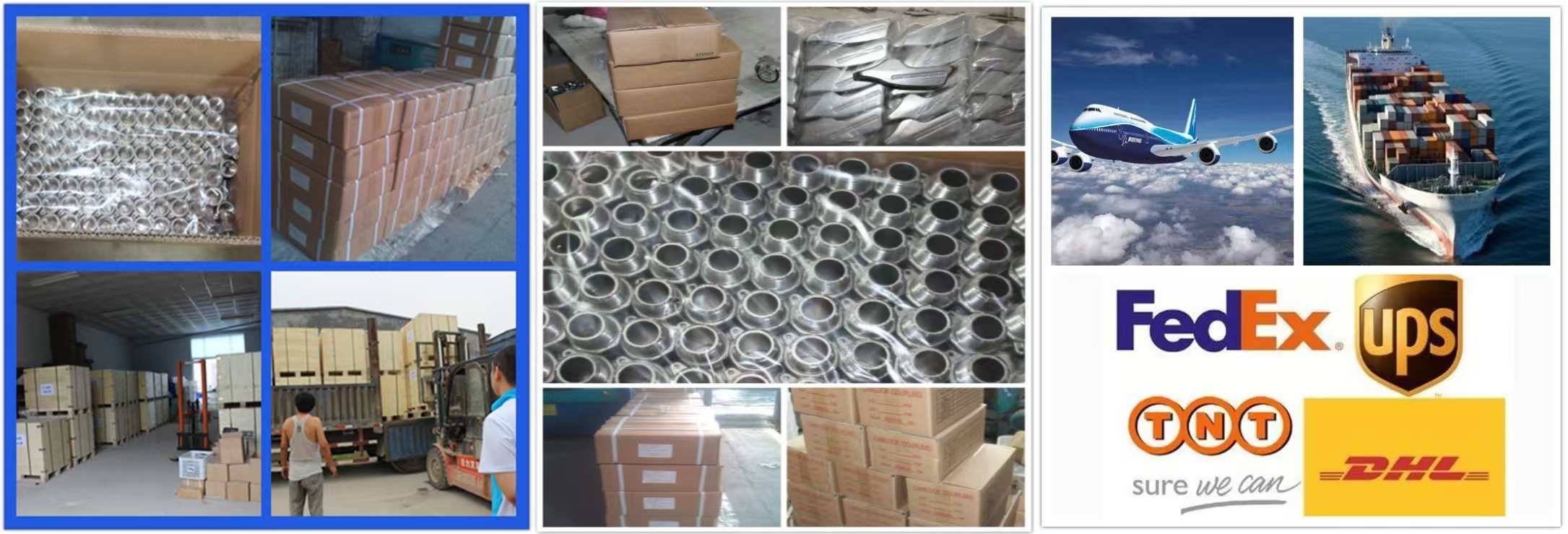
Packaging & Delivery

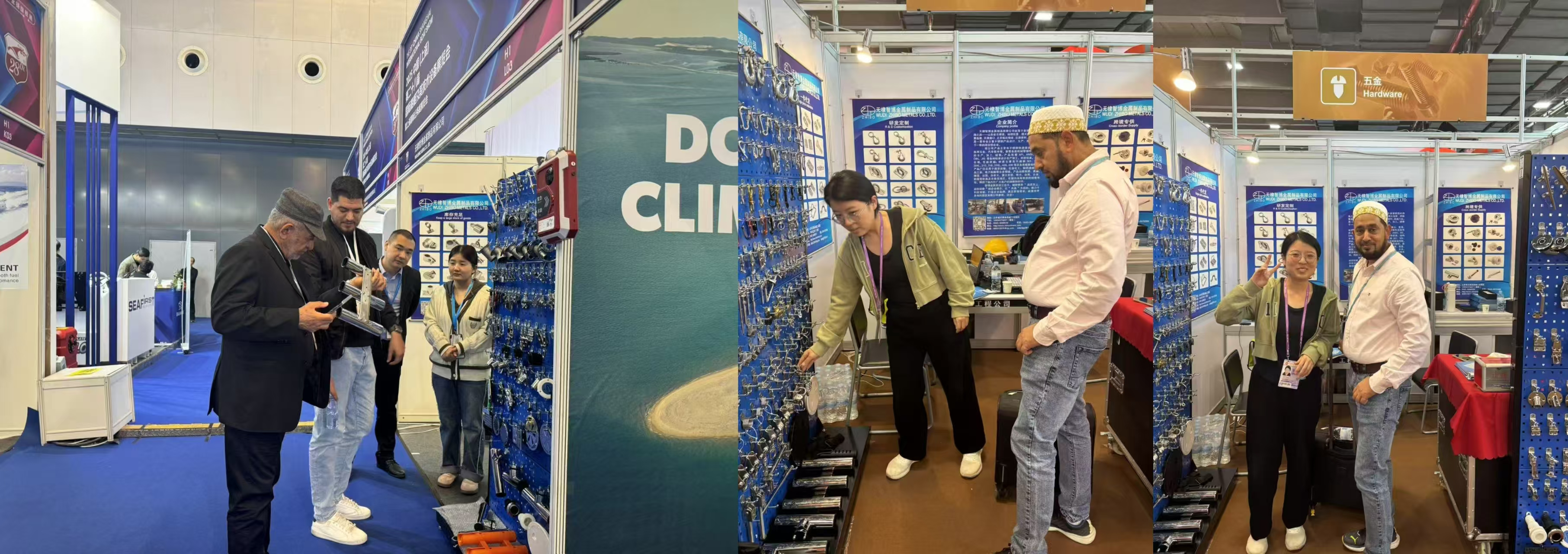
Exhibition