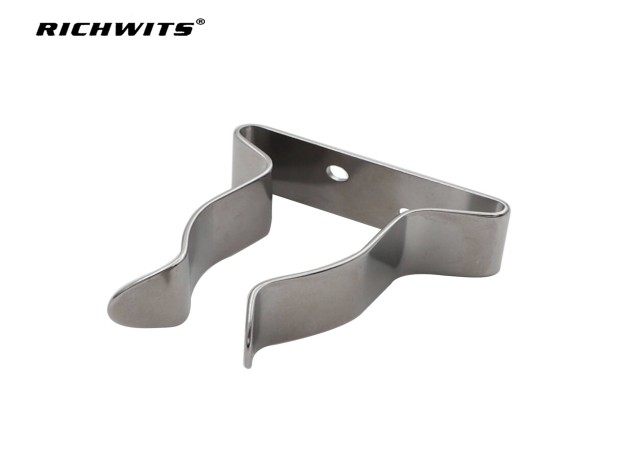
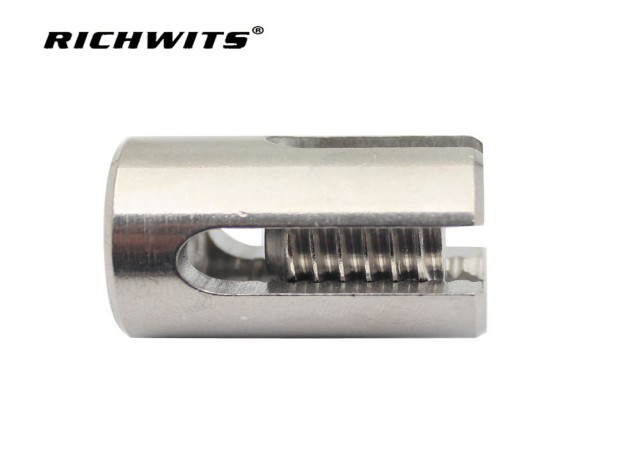
Not all stainless steel survives saltwater the same way. That mistake can shorten the life of Marine Hardware and stainless steel yacht fittings. In this article, you will learn what marine grade stainless steel means and why 316 outperforms 304. We will also explain where it is used and what to expect in real marine conditions.

What Marine Grade Stainless Steel Actually Means
Why “stainless” does not mean corrosion-proof
Stainless steel earns its reputation from a thin chromium-oxide film that forms naturally on the surface and helps shield the metal beneath from oxygen and moisture. That protective layer is self-repairing when the surface is lightly damaged, which is why stainless steel performs far better than ordinary carbon steel in wet conditions. In marine service, however, “stainless” should never be understood as “immune.” Saltwater introduces chloride ions that can break down the passive film in localized areas, leading to pitting, crevice corrosion, and the brown discoloration often called tea staining.
In other words, marine exposure does not cancel the benefits of stainless steel, but it does expose the limits of lower-performing grades. A bright finish on the day of installation does not guarantee long-term durability in salt-rich air, splash zones, or areas where moisture remains trapped. That is why marine environments quickly separate general stainless products from alloys that are actually suited to harsh service.
What makes a stainless steel alloy suitable for marine use
A stainless steel alloy becomes suitable for marine use when it can withstand repeated contact with salt spray, humid air, standing moisture, and chloride contamination without losing appearance or structural reliability too quickly. This is why the term “marine grade” usually points to alloys chosen for harsher coastal and offshore environments rather than for ordinary outdoor service.
In practical use, marine conditions often combine several risk factors at once:
● airborne salt and splash exposure
● trapped moisture in joints, fasteners, and crevices
● reduced oxygen in tight contact areas
● long-term wet-dry cycles that concentrate salt deposits
Because of those conditions, marine-grade stainless steel is expected to resist localized corrosion much better than standard stainless used in kitchens, construction trim, or general hardware. That distinction matters for exposed Marine Hardware and for components that must keep both strength and finish over time.
The role of chromium, nickel, and molybdenum
The corrosion behavior of stainless steel depends heavily on a small group of alloying elements working together rather than on one ingredient alone. Chromium creates the passive surface film, nickel helps stabilize the alloy and improve toughness, and molybdenum is the key addition that makes true marine performance possible in chloride-rich settings. This is why alloys associated with stainless steel yacht fittings are typically judged by how well they resist pitting, not simply by whether they look polished at installation.
Element | Main function in stainless steel | Why it matters in marine use |
Chromium | Forms the protective oxide layer | Provides the first barrier against corrosion |
Nickel | Improves structure and overall corrosion performance | Helps the alloy remain durable in damp, demanding service |
Molybdenum | Increases resistance to pitting and crevice corrosion | Makes the alloy more reliable in chloride-heavy environments |
Why 316 Stainless Steel Is Usually Called Marine Grade
How 316 differs from 304 in real marine conditions
The difference between 304 and 316 becomes most obvious not in a catalog, but on a boat, a dock, or any piece of hardware exposed to salt-rich air. In sheltered inland settings, 304 stainless steel can perform well for a long time and still look clean. In coastal and offshore environments, though, it tends to lose that margin much faster. Once salt deposits remain on the surface, especially in corners, under fastener heads, or around fittings that stay damp, 304 is more likely to show tea staining, localized attack, and a gradual decline in surface integrity.
By contrast, 316 holds up better when exposure is frequent, cleaning is imperfect, and the environment is constantly cycling between wet and dry. That is why the gap between the two grades is practical before it is chemical: one may survive marine use for a while, but the other is built to tolerate it more reliably.
Grade | Best described as | Typical marine performance | Most suitable use context |
304 | General-purpose stainless | Acceptable in low-salt or protected conditions, but more vulnerable in marine exposure | Interior fittings, freshwater use, low-risk sheltered areas |
316 | Standard marine stainless | Stronger resistance to salt spray, coastal humidity, and wet-dry chloride cycles | Exposed Marine Hardware, deck fittings, fasteners, rails |
316L | Low-carbon version of 316 | Similar corrosion resistance to 316, with better behavior around welded zones | Fabricated railings, tanks, welded supports, custom assemblies |
Why chloride resistance matters so much at sea
Chloride resistance is the real reason 316 earns the marine-grade label. Saltwater does not need to flood a part to start damage; mist, splash, and dried salt residue can be enough. Chlorides attack the passive film that normally protects stainless steel, and once that film is disrupted in a small area, corrosion can become concentrated rather than uniform. This is why stainless parts may still look bright overall while hidden pitting is developing at isolated points.
Grade 304 is more exposed to that risk because it lacks the extra protection that makes 316 more stable in chloride-heavy service. Over time, the result may be discoloration at first, followed by deeper attack in crevices and stress points where marine hardware cannot afford to weaken.
Where 316L fits into the picture
316L belongs in the same family as 316 and is usually discussed when welded stainless components are involved. The “L” means low carbon, which helps reduce the risk of corrosion problems forming around welds after fabrication. That makes it especially relevant for custom-built marine parts where the material is cut, joined, and finished rather than simply machined into a standard fastener or fitting.
In real applications, 316L is less about replacing 316 and more about protecting the same marine-grade performance in assemblies where welding changes the material’s behavior. It is commonly chosen for fabricated railings, tanks, and other welded sections that must keep their corrosion resistance after manufacturing.
Why 316 became the standard for marine environments
316 became the default marine choice because it balances corrosion resistance, availability, durability, and practical service life better than lower grades in saltwater conditions. It is widely used across exposed fittings, deck hardware, rails, shackles, and fabricated components because these parts must do more than resist occasional moisture; they must withstand repeated chloride exposure without becoming a maintenance problem or a reliability risk.
In marine settings, the standard is shaped by consequence. When fittings are load-bearing, highly visible, difficult to replace, or constantly exposed, the safer baseline is the alloy that offers a longer margin before corrosion becomes a structural concern.

Where Marine Grade Stainless Steel Is Commonly Used
Marine Hardware exposed to salt spray and weather
Marine-grade stainless steel is most visible on parts that spend their entire service life facing salt spray, shifting temperatures, UV exposure, and frequent wet-dry cycles. On boats and coastal structures, this includes deck fittings, handrails, cleats, hinges, latches, stanchion bases, and exposed fasteners. These components are not fully submerged, yet they are repeatedly splashed, coated with salt, and left to dry with chloride deposits on the surface.
That pattern is exactly what makes marine exposure so demanding. Even when hardware is above the waterline, it is still under constant chemical stress. For that reason, stainless chosen for exterior Marine Hardware is expected to protect both function and appearance over time, not simply resist rust for a short period after installation.
Application area | Typical components | Main exposure risk | Why marine-grade stainless is used |
Open deck and exterior surfaces | Cleats, rails, hinges, fasteners, deck fittings | Salt spray, coastal humidity, sun, repeated drying | Helps reduce staining, pitting, and premature surface breakdown |
Splash-prone and wet zones | Yacht fittings near drains, washdown areas, lower exterior sections | Standing moisture, trapped salt, limited oxygen in crevices | Improves durability where corrosion risk is higher and more localized |
Fabricated assemblies | Railings, tanks, supports, custom-built sections | Weld-related sensitivity, surface contamination, variable finishing quality | Maintains corrosion resistance when material choice is matched with proper fabrication |
Stainless steel yacht fittings in high-moisture or high-risk areas
Some stainless steel yacht fittings operate in conditions that are more aggressive than ordinary deck exposure. These are the fittings placed near constant splash, runoff, washdown zones, lower exterior edges, or areas where water tends to collect and evaporate slowly. In such places, corrosion is not always dramatic at first. It often begins in hidden edges, beneath fitting bases, or inside narrow gaps where salt residue remains trapped.
That is why high-risk yacht fittings demand more than a polished finish. They need a grade capable of resisting localized attack in the places owners do not inspect every day.
Common examples include:
● fittings near scuppers, drains, and deck runoff paths
● lower-mounted exterior hardware exposed to frequent splashback
● fasteners installed in damp joints or under compression
● components in areas that are washed often but not fully dried
These applications matter because failure is not only cosmetic. A fitting that begins to pit or weaken in a hidden area may still look acceptable from a distance while losing reliability where loads are transferred.
Welded and fabricated stainless components
Marine-grade stainless steel is also widely used in fabricated parts such as railings, supports, tanks, brackets, and custom frames. In these applications, material grade alone is not enough to guarantee long-term performance. Welding changes the surface condition of stainless steel and can create zones that are more vulnerable if heat treatment, cleaning, and finishing are not handled properly.
A well-made fabricated assembly usually depends on several factors working together: the right alloy, controlled welding practice, a clean surface, and finishing methods that help restore corrosion resistance after fabrication. For that reason, fabricated stainless components are often judged not only by whether they are labeled marine grade, but by how carefully they were made. Poor weld cleanup, rough finishing, or contamination from ordinary steel tools can shorten service life even when the base metal itself is suitable for marine use.
What Marine Grade Stainless Steel Can and Cannot Prevent
Why tea staining and surface discoloration can still happen
Marine-grade stainless steel is chosen because it performs far better than ordinary stainless in salt-rich environments, but that does not mean it will stay perfectly bright under all conditions. One of the most common surprises is tea staining, a brownish surface discoloration that appears on exposed fittings, rails, and fasteners. This usually develops when salt deposits are allowed to remain on the surface, especially in warm, humid, or poorly ventilated areas where moisture evaporates slowly.
Tea staining is often more of a surface warning than a sign of immediate structural failure, yet it matters because it shows that the protective passive layer is being stressed repeatedly. In practice, this means marine-grade stainless steel can greatly slow corrosion, but it cannot fully prevent cosmetic staining when exposure is severe and cleaning is neglected.
The conditions that can still cause corrosion
Even high-performance marine alloys can develop corrosion when the environment or installation works against them. The most persistent problem is pitting, which happens when chlorides break through the passive film in tiny local spots and start attacking inward. Crevice corrosion is another risk, especially under washers, inside joints, beneath fitting bases, or anywhere water sits with little oxygen. These hidden locations are more dangerous than open surfaces because corrosion can progress without being noticed early.
Another common source of trouble is contamination from carbon steel tools, brushes, or steel wool, which can leave iron particles behind on the surface. Once those particles rust, they create misleading staining and can also disrupt the protective layer of the stainless beneath. Prolonged salt buildup makes all of these risks worse because it keeps chlorides concentrated on the metal long after splash exposure ends.
Issue | What typically triggers it | Why it still happens on marine-grade stainless |
Tea staining | Salt residue, humidity, poor rinsing, warm coastal exposure | Surface film is stressed repeatedly even when the alloy has good corrosion resistance |
Pitting corrosion | Chloride attack in localized points | Passive protection breaks down in small areas and corrosion moves inward |
Crevice corrosion | Trapped moisture in joints, under fasteners, low-oxygen gaps | Hidden spaces prevent the surface from protecting itself effectively |
Contamination staining | Contact with carbon steel tools or steel particles | Foreign iron rusts on the surface and interferes with stainless performance |
How basic maintenance helps preserve performance
Basic maintenance does not turn stainless steel into a maintenance-free material, but it does make a major difference in how long the surface remains clean and how well the alloy performs. The most effective habit is regular freshwater rinsing after salt exposure, because it removes the chloride deposits that keep attacking the passive layer between uses. Cleaning products also matter. Chlorine-based cleaners should be avoided because they are aggressive toward stainless steel, particularly in marine service where the surface is already under chemical stress.
It is equally important to use non-contaminating tools such as soft cloths, dedicated synthetic pads, and brushes that have not been used on ordinary steel.
A practical care routine usually includes:
● rinsing exposed hardware with fresh water after use
● drying or wiping areas where water tends to collect
● inspecting crevices, joints, and fastener bases during routine checks
● removing early discoloration before deposits become more stubborn
These steps are simple, but they directly support the way marine-grade stainless steel is designed to work: by keeping the surface clean enough for its protective film to remain effective.
Conclusion
Marine grade stainless steel is not the same as ordinary stainless steel. In saltwater conditions, 316 gives stronger protection than 304, especially for Marine Hardware and stainless steel yacht fittings. Understanding these differences helps buyers choose materials with better long-term value. Wudi Zhibo Metals Co., Ltd. supports this need with durable stainless products, reliable quality, and practical service for marine applications.
FAQ
Q: Why does Marine Hardware usually use 316 instead of 304?
A: Marine Hardware uses 316 because it resists chloride attack, pitting, and tea staining better in saltwater service.
Q: Are stainless steel yacht fittings always made from 316?
A: No. stainless steel yacht fittings may use 304 in low-exposure areas, but 316 is preferred for harsher marine conditions.
Q: Can marine grade stainless steel still corrode?
A: Yes. Marine Hardware can still corrode if salt deposits, crevices, poor cleaning, or steel contamination damage the passive layer.