ZB6901
RICHWITS
ZB6901
| size: | |
|---|---|
| Availability: | |
| Quantity: | |
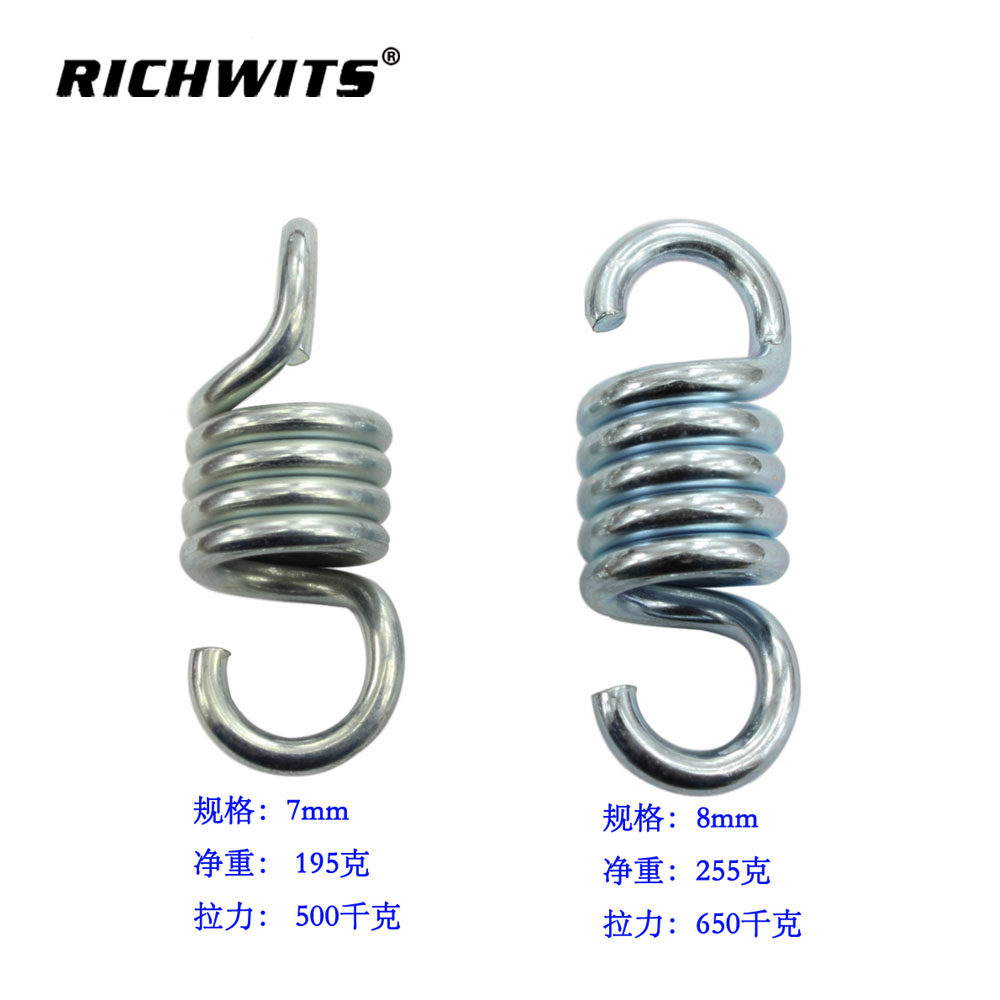
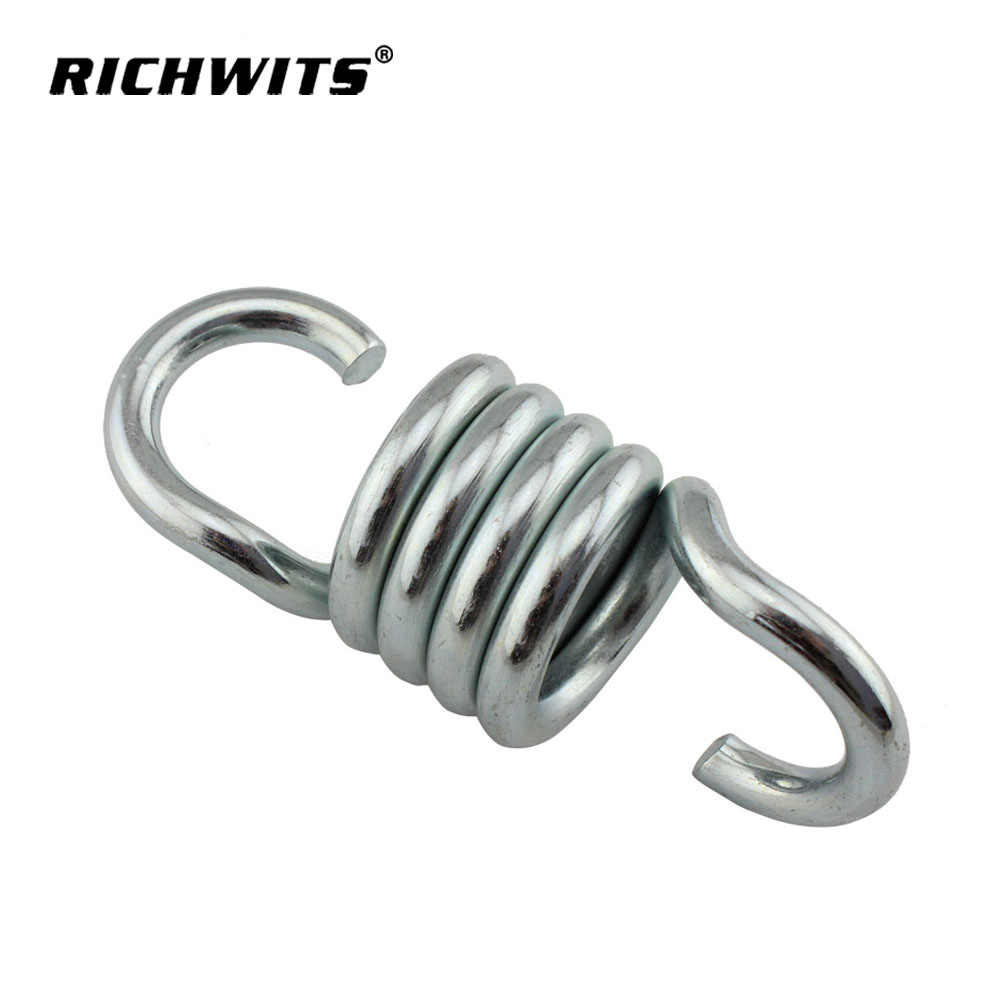
* The hanging chair spring length is approx 108mm(4.25"), thickness of steel is 7mm(0.27"),Spring capacity 1102lb (500kg).
* The swing springs are SUPER HEAVY DUTY, will absorb the shock and preserve the longevity, Reduce noise, vibration and stress, not stretch out.
* Hammock Spring is Zinc plating on the harden steel, surface electric galvanizing, Sturdy and Anti-corrosion, enhance the weather resistance and lifetime of the porch swing spring.
* The heavy duty spring locates between the overhead support and swing chain to provide a more comfortable, softer feel to porch swings, free-standing swings, hammocks and hammock chairs.
* The Spring Hook Fits Almost All porch swings Bag, Hanging Chairs, Cocoon, hanging egg chair, wicker basket Gard, Hanging Hammock Chairs, heavy bags, boxing, yard sling swing and other any of your favorite sport.

| Packing and Delivery |

| Exhibition |

| FAQ: |
1. Why does stainless steel have magnetism?
Often, people use magnets to test the quality of stainless steel. If a magnet doesn't attract and has no magnetism, it is genuine and of good value. On the contrary, it is regarded as a counterfeit. In fact, this is an extremely one-sided and unrealistic method of wrong identification.
Austenitic stainless steel is non-magnetic or weakly magnetic. Martensitic or ferritic stainless steel is magnetic. However, when austenitic stainless steel undergoes cold working, the microstructure of the processed area will also transform into martensite. The greater the degree of processing deformation, the more martensitic transformation occurs and the greater the magnetic property. The material of the product will not change. More professional methods should be adopted to test the material of stainless steel. (Spectral detection, stainless steel identification liquid detection).
2. Why does stainless steel rust?
a. When dust containing other metal elements or particles of dissimilar metals accumulate on the surface of stainless steel, in a humid environment, the condensate water between the adherent and the stainless steel forms a micro-battery, triggering an electrochemical reaction and damaging the protective film. This is known as electrochemical corrosion.
b. When organic substances such as vegetable juice, noodle soup, and phlegm adhere to the surface of stainless steel, they form organic acids in the presence of water and oxygen. Over a long period of time, these organic acids will corrode the metal surface.
c. The stainless steel surface adheres to substances containing acids, alkalis and salts (such as splashed alkali water and lime water during wall decoration), causing local corrosion.
d. In polluted air (such as that containing large amounts of sulfides, carbon oxides, and nitrogen oxides), upon encountering condensation water, liquid spots of sulfuric acid, nitric acid, and acetic acid are formed, causing chemical corrosion.
* The hanging chair spring length is approx 108mm(4.25"), thickness of steel is 7mm(0.27"),Spring capacity 1102lb (500kg).
* The swing springs are SUPER HEAVY DUTY, will absorb the shock and preserve the longevity, Reduce noise, vibration and stress, not stretch out.
* Hammock Spring is Zinc plating on the harden steel, surface electric galvanizing, Sturdy and Anti-corrosion, enhance the weather resistance and lifetime of the porch swing spring.
* The heavy duty spring locates between the overhead support and swing chain to provide a more comfortable, softer feel to porch swings, free-standing swings, hammocks and hammock chairs.
* The Spring Hook Fits Almost All porch swings Bag, Hanging Chairs, Cocoon, hanging egg chair, wicker basket Gard, Hanging Hammock Chairs, heavy bags, boxing, yard sling swing and other any of your favorite sport.

| Packing and Delivery |

| Exhibition |

| FAQ: |
1. Why does stainless steel have magnetism?
Often, people use magnets to test the quality of stainless steel. If a magnet doesn't attract and has no magnetism, it is genuine and of good value. On the contrary, it is regarded as a counterfeit. In fact, this is an extremely one-sided and unrealistic method of wrong identification.
Austenitic stainless steel is non-magnetic or weakly magnetic. Martensitic or ferritic stainless steel is magnetic. However, when austenitic stainless steel undergoes cold working, the microstructure of the processed area will also transform into martensite. The greater the degree of processing deformation, the more martensitic transformation occurs and the greater the magnetic property. The material of the product will not change. More professional methods should be adopted to test the material of stainless steel. (Spectral detection, stainless steel identification liquid detection).
2. Why does stainless steel rust?
a. When dust containing other metal elements or particles of dissimilar metals accumulate on the surface of stainless steel, in a humid environment, the condensate water between the adherent and the stainless steel forms a micro-battery, triggering an electrochemical reaction and damaging the protective film. This is known as electrochemical corrosion.
b. When organic substances such as vegetable juice, noodle soup, and phlegm adhere to the surface of stainless steel, they form organic acids in the presence of water and oxygen. Over a long period of time, these organic acids will corrode the metal surface.
c. The stainless steel surface adheres to substances containing acids, alkalis and salts (such as splashed alkali water and lime water during wall decoration), causing local corrosion.
d. In polluted air (such as that containing large amounts of sulfides, carbon oxides, and nitrogen oxides), upon encountering condensation water, liquid spots of sulfuric acid, nitric acid, and acetic acid are formed, causing chemical corrosion.